cyber security Archives - DNA IT Solutions

Tag Archives: cyber security

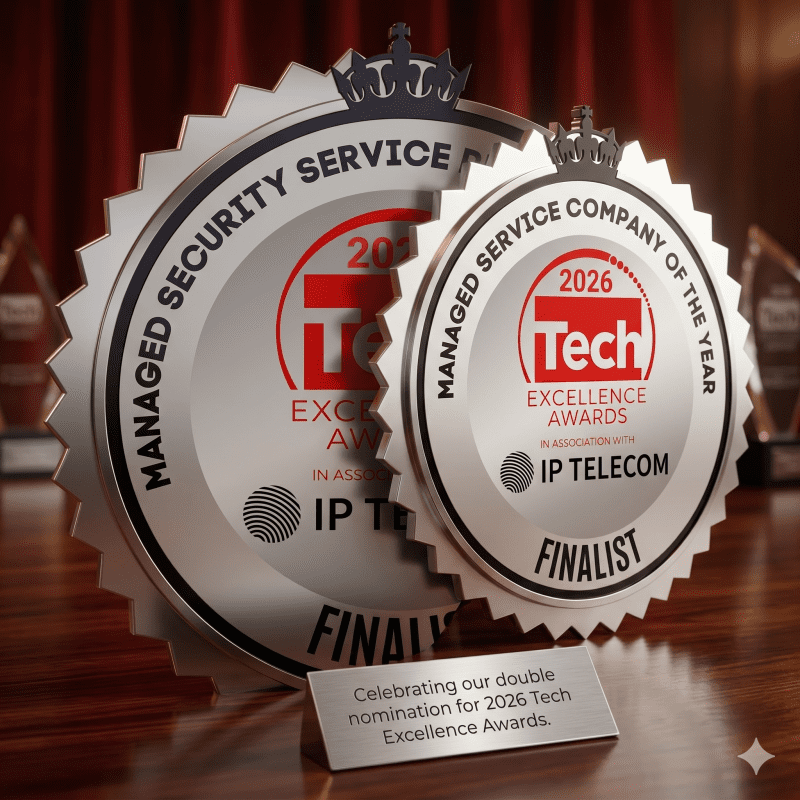
DNA IT Solutions shortlisted for two categories at TechExcellence Awards 2026

DNA have ben shortlisted in the MSP and MSSP categories of the TechExcellence Awards

DNA IT Solutions has been shortlisted for Managed Security Services Provider of the Year and Managed Service Company of the Year at the TechExcellence Awards 2026. Hosted by TechCentral.ie, the awards ceremony takes place on 14th May at the Royal Marine Hotel in Dublin.

The nomination continues a strong run at the awards for the Blanchardstown-based company. DNA IT Solutions won Managed Security Services Provider of the Year in 2025 and 2024, and now returns as a shortlisted entrant in both categories simultaneously.

The TechExcellence Awards are widely regarded as the ‘Oscars’ of the Irish technology industry, recognising outstanding performance across managed services, security, cloud, and emerging technology.

The double shortlisting reflects DNA IT Solutions’ continued focus on delivering integrated IT, cloud, and security services to mid-market Irish businesses — organisations that carry the data risk and regulatory obligations of larger enterprises but need a provider built to serve them at their scale.

Declan Hussey, CEO of DNA IT Solutions, said:

“Winning back-to-back at the TechExcellence Awards is something we’re proud of, but the number that matters most to me is 10 years — our average client retention. That figure is earned by a team that shows up, knows their clients’ businesses inside out, and never treats a support call as just a ticket. This shortlisting belongs to them.”

The winners will be announced at the awards ceremony on 14th May. Further details at techawards.techcentral.ie.

How to Reduce Cyber Insurance Premiums: Security Measures That Lower Your Costs

This week, our Sales Manager, Andrew Pearsall had a fascinating conversation with a client about the evolving landscape of cyber insurance and how it’s increased in scope and importance over the years.

Up until very recently, the questions on the cyber insurance proposal form were relatively basic. However, as more and more security threats emerge, the questionnaire and the information required by clients to provide, has become more onerous.

Premiums continue to rise.

The cyber insurance market in Ireland is growing rapidly and according to PwC’s 2026 Global Digital Trust Insights report, 41 per cent of Irish organisations are looking to update cyber insurance to mitigate risk and build resiliency.

However, an insurance policy alone will not provide adequate protection in an environment where cyber threats are flourishing.

Proper cyber resilience is based on actionable, practical plans, underpinned by people, processes and technology solutions that support business continuity in the event of a breach.

It’s a stark finding from PwC’s survey that just 28% of Irish organisations have implemented robust cyber resilience actions, well behind their global counterparts at 33%.

In addition to this, less than one in 10 (8%) of Irish organisations invest significantly more on proactive cybersecurity measures than reactive measures, lagging well behind their global counterparts at 24%.

This raises the question: why spend money on being reactive after an incident, when you can invest in your cyber security and be proactive? You get more protection, at a reduced cost.

Key Takeaways:

  • Cyber insurance is no longer just about coverage – it’s about your proactive security posture.
  • Insurers are increasingly rewarding organisations that demonstrate strong cybersecurity frameworks.
  • A well-structured security wrap with DNA’s layered defence and 24/7 SOC team incident response can significantly reduce your premiums.
  • The process of completing insurance forms is a valuable exercise in identifying gaps and strengthening internal policies.
  • Testing is not an option; it’s an absolute must! DR Testing, Pen Testing all need to be done to make sure there’s no gaps

Advice for IT and Business Leaders

If you’re reviewing your cyber insurance this quarter, don’t just tick the boxes. Let’s use it as an opportunity to audit your security stack, align with best practices, and negotiate better terms. The stronger your defences, the better your coverage and the lower your costs.

7 Elements of an Effective Defense in Depth Strategy

7 ELEMENTS OF AN EFFECTIVE DEFENSE IN DEPTH STRATEGY

WHAT IS DEFENSE IN DEPTH (DiD)?

With cyberattacks growing in frequency and sophistication, businesses like yours are susceptible to data breaches now more than ever, irrespective of their size and industry. As you grow digitally and handle increasingly greater volumes of sensitive data, cybercriminals are constantly looking for ways to penetrate your defenses.

To effectively defend your business against today’s sophisticated threats, amplifying your organizational security is critical. With that in mind, adopting a Defense in Depth (DiD) strategy could be exactly what you need to improve your cybersecurity posture and keep malicious cyberthreats at bay.

In simple terms, DiD is a cybersecurity approach in which multiple defensive methods are layered to protect an organization. Since no individual security measure is guaranteed to endure every attack, combining several layers of security is more effective.

This layering approach was first conceived by the National Security Agency (NSA) and is inspired by a military tactic of the same name. However, in IT, the approach is intended to prevent an incident and not delay it, as in the military.

Remember not to confuse DiD with another cybersecurity concept called layered security. While layered security uses different security products to address a particular security aspect, such as email filtering, DiD is more comprehensive and includes multiple security measures to address distinct threats related to the entire IT infrastructure.

KEEP AN EYE ON THESE THREATS

All businesses, irrespective of their size and industry, can fall prey to malicious
attacks. Listed below are 23 cybersecurity threats you should be aware of:

Malware (abbreviated from malicious software) is a generic term for viruses, trojans and other dangerous computer programs used by cybercriminals to severely damage an IT environment or gain access to business-critical data. These programs may propagate via email attachments, website downloads or by exploiting the gaps in your operating system or other software.

Ransomware is a type of malware that threatens to disclose sensitive data or blocks access to files/systems, most of the time by encrypting it until the victim pays a ransom amount within a stipulated deadline. Failure to pay on time can lead to data leaks or permanent data loss. Even if you pay, there’s no guarantee that you will recover your lost data or won’t be exploited in the future.

Insider threats originate from within the targeted business. They could be past workers, suppliers or other business partners who have access to critical business data and computer systems, and they knowingly or unknowingly misuse their access. An insider threat is challenging
to identify since it comes from within the organization.

These attacks are common and easy to implement. When DoS or DDoS attacks happen, hackers flood the targeted system with a high volume of data requests, causing it to slow down, crash or shut down. An abrupt slowdown or unavailability of a website or service is the most evident sign of a DDoS assault.

Credential theft involves the unlawful acquisition of information that an individual or business uses to access websites and sensitive data. Credential theft lets hackers reset passwords, lock the victim’s account, download private data, gain access to other endpoints within the network or even erase sensitive data and backups.

Phishing is a type of social engineering attack in which hackers appear as reliable sources to trick victims into opening phony emails or SMSs so they can penetrate those networks. Business email compromise
(BEC) is a scam where cybercriminals
use compromised or impersonated email accounts to manipulate victims into transferring money or sharing sensitive information.

Cloud jacking, or cloud hijacking, is a type of attack where cybercriminals exploit cloud vulnerabilities to steal the information of an account holder to gain server access.

A MITM attack takes place when an unauthorized entity breaks into a company’s network and behaves as part of the network. It’s a form of eavesdropping in which the attacker intercepts the entire conversation and controls it from the inside. Hackers do this to capture and manipulate sensitive personal information in real-time, such as personal login information, account details and credit card numbers.

A DNS attack is a threat in which the hacker exploits vulnerabilities in the DNS protocol. This is a significant problem in cybersecurity because DNS is a vital component of the IT infrastructure. Hackers often target the servers that host domain names in DNS attacks. In other instances, these attackers will aim to identify flaws in the system and exploit them for their own gain.

Botnets are networks of hijacked, interconnected devices that are manipulated for scams and cyberattacks. A botnet attack is usually conducted by sending spam, stealing data, exploiting sensitive information or launching a vicious DDoS attack.

Hackers use a victim’s computing power to secretly and illegally mine cryptocurrency. Cryptojacking can target individual users, big enterprises and even industrial control systems (ICS). Whatever the method of transmission, cryptojacking code usually operates covertly in the background as unwitting victims use their devices as usual.

This cyberattack aims at stealing classified data from a corporate house or the government for financial, political or competitive advantages. Most cases of cyberespionage are classified as advanced persistent threats (APTs). An APT is a sophisticated cyberattack in which a hacker infiltrates a network without being discovered to acquire critical information over an extended period.

AI and ML help hackers become more efficient in developing an in-depth understanding of how businesses guard against cyberattacks. Using machine learning, hackers can tailor phishing emails to avoid bulk email lists and optimize them to encourage engagement and clicks. To give the interaction the best possible legitimacy, hackers even generate realistic images, social media personas and other content using artificial intelligence.

The adoption of IoT is undoubtedly on the rise. However, due to unregulated data exchange and insufficient legislation, IoT has become a favorite target for cybercriminals. Threat actors’ ability to harm not only the network and software that enable IoT devices, but also the devices themselves, is a significant source of concern regarding the security of IoT devices.

Vulnerabilities within web applications allow hackers to gain direct access to databases to manipulate sensitive data. Business databases are regular targets because they contain sensitive data, including Personally Identifiable Information (PII) and banking details. Common web application attacks include DDoS, SQL injections, path traversal, cross-site scripting and local file inclusion.

An APT is a sustained and sophisticated cyberattack in which a malicious actor gains access to a network and continues undetected for a prolonged duration. Most of the time, it aims at stealing data rather than damaging the IT environment. These persistent attacks are frequently orchestrated by nation-states or criminal cartels.

SQL injection is a code injection technique in which hackers place malicious code in SQL statements. This technique can destroy a database. A successful attack might lead to the illegal access of user lists, the deletion of entire tables and, in some circumstances, the attacker obtaining administrative rights to a database.

Zero-day exploits are cyberattacks aimed at vulnerabilities that a software vendor has not yet fixed or patched. By exploiting such an unpatched vulnerability, these attacks have a significant chance of success and are tough to protect against by using outdated security tools.

Spyware is software that, if installed on your computer, stealthily monitors your online behavior without consent. It can gather information about an individual or business and transfer that data to other parties. You can protect your business from spyware by using defenses like secure email and web gateways, automatic software patch management and regular employee awareness training on security.

Identity theft is a type of fraud in which a cybercriminal creates a fake account/profile like a genuine one in order to carry out scams like money laundering. Synthetic identity theft is a form of identity theft in which scammers combine real and fake information to create a new false identity. Most often, the crimes frequently go unreported or unobserved until the fraudster commits any fraud.

A software vulnerability is a flaw present within software or in an operating system (OS). They can enter your network through various channels, some of which are the fault of the software vendor and others that are the fault of the user. Almost all software will have vulnerabilities in one form or another that must be fixed before cybercriminals rush to exploit them.

A deep fake is a cyberthreat that uses artificial intelligence to manipulate or generate audio/video content that can deceive end users into believing something untrue. To make their messages seem more credible, scammers now leverage AI to create realistic looking user profiles, photographs and phishing emails.

The initial overlaying of 5G technology will be over the existing 4G LTE network. Because of this, there will be vulnerabilities that the new technology will inherit from its predecessor.

DEFEND AGAINST THREATS BY IMPLEMENTING A DiD STRATEGY

You can categorize DiD into three security control areas:

Your business’s policies and procedures fall under administrative controls. Make sure to document your policies and procedures to ensure that the security guidelines are available and adhered to. Whether it’s employee onboarding protocols, data processing and management procedures, information security policies, vendor risk management, third-party risk management frameworks or information risk management strategies, you should have clearly defined policies for all.

Your business’s hardware or software intended to protect your systems and resources falls under technical controls. Examples of technical controls are firewalls, configuration management, disk/data encryption, identity access management (IAM), vulnerability scanners, patch management, virtual private networks (VPNs), intrusion detection systems (IDS), security awareness training and more.

Anything aimed at physically limiting or preventing access to your IT systems falls under physical controls. Examples are fences, keycards/ badges, CCTV systems, locker rooms, trained guard dogs and more.

7 ESSENTIAL ELEMENTS OF DiD

Here are seven key elements that must be a part of your DiD strategy:

1

FIREWALLS

A firewall is a security system comprising of hardware or software that can protect your network by filtering out unnecessary traffic and blocking unauthorized access to your data. Other than blocking unwanted traffic, firewalls can also prevent malicious software from infecting your network. Firewalls can provide various levels of protection, so you must select the level of protection your business needs.

2

INTRUSION DETECTION AND
PREVENTION SYSTEM (IDPS)

IDPS monitors your network traffic, evaluates it and provides instant resolution whenever it spots any malicious behavior. Additionally, it monitors your network for any anomalies around the clock, and it notifies the stakeholders and blocks attacks if any suspicious activity is discovered.

3

ENDPOINT DETECTION AND RESPONSE (EDR)

EDR solutions operate by constantly monitoring endpoints to find suspicious or malicious behavior in real time. This is effective against internal and external attacks and is powered by innovative technologies such as machine learning.

4

NETWORK SEGMENTATION

When you divide your business’s network into smaller units, you can monitor data traffic between segments and safeguard segments from one another. Additionally, by automating the process, you can restrict unauthorized entities from accessing vital information.

5

THE PRINCIPLE OF LEAST PRIVILEGE (PoLP)

PoLP is a cybersecurity idea in which you provide users only the access they need to carry out their tasks. You can safeguard privileged access to resources and data that are important to your business by using this information security best practice.

6

STRONG PASSWORDS

Poor password hygiene, including the use of default passwords like “1234” or “admin,” put your business at risk. Equally risky is the habit of using the same passwords for multiple accounts. It’s essential to have strong passwords and an added layer of protection by using practices such as multifactor authentication (MFA).

7

PATCH MANAGEMENT

Poor patch management might leave security holes that can expose your company to cyberattacks. Do your employees manually patch software updates or deal with the hassles of outdated on-premises patch management solutions during working hours? It’s time to transition to automated patch management if you want to increase security and boost employee productivity.

Stay Safe on Cyber Monday

Cyber Monday Stay safe DNA IT Solutions

Today is one of the biggest online shopping days in Ireland.  Black Friday may be the day we queue outside shops to pick up a bargain, but Cyber Monday is when we become keyboard warriors in search of great deals.

Cyber Criminals Love it

While the retailers love the extra revenue and we certainly love the deals, unfortunately the hackers also love this special day.  They can really catch us off guard today.  We can get caught up in the drama of the day and in a frenzy we may click on dangerous email links leading us to dodgy websites.

New websites

On this day we know time is limited and there is a real FMO (fear of missing out), our friends may get the bargain of the day.  So we are more likely to be on new websites searching for the best offers.   Most of these websites are absolutely fine but we can end up on a dangerous one very easily if we don’t take care.   We are watching social media for offers and when we click we arrive somewhere that looks kind of familiar but on closer inspection it can be a website that is collecting payment details for products that don’t exist.   Many of these sites are created to look very like a popular retailer so you must be vigilant.

Phishing emails

While looking for bargains, all sense goes out the window.  We might get an email telling us about this amazing deal and normally we would be wary but on the day that is in it, we will probably just click without thinking.  Stop!  Phishing emails, social engineering, identity theft are all rife on a day like today.  Offers that are too good to be true, are normally not genuine.

What to do  

Ensure your security software is up to date and all patches have been updated.  Check that the firewall and antivirus is working.  In the office, share your cyber security knowledge with your team to help them stay safe.

It seems obvious but here is a reminder:  Think before you click, only visit trusted sites, check carefully before you give any payment details, look for any signs that the email might be fake or spam.  Stay safe this cyber Monday.

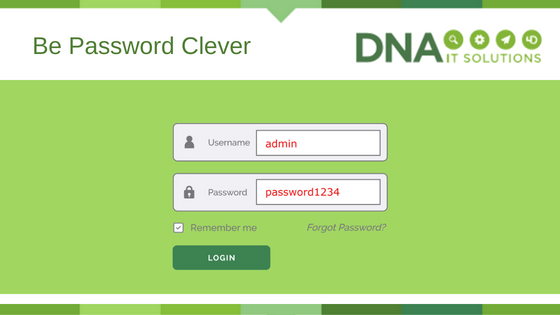
Be Password Clever

Be password clever DNA IT Solutions

A password is not just a string of letters and numbers, it is the key to gaining access to a valuable place.  Passwords allow access to bank accounts, email accounts and more.  In the wrong hands, access to your accounts can result in disaster.

Online each day 

We access so many tools and accounts online each day. Our phones and a few codes allow us to be on social media, monitor our banking and send emails.  We are fortunate to have all this technology literally at our fingertips.  However, with this easy access comes the cyber criminal always trying to make some money.

Password Terms

Hackers try to gain access to accounts by a some common methods.  ‘Brute force’ tries the most common passwords against the account until it figures it out.  You can reduce the chances of getting hit with this by having a limiter on the account, this is a good security layer.

‘Password spraying’ is trying to figure out the same common password over many accounts.  This operates at a slower rate so they won’t be noticed.   We can tend to use the same password over several accounts so we can remember it easily, that is not such a good idea.  If one is compromised, then it can be used to access other accounts.

Here are some simple tips to help keep you password safe:  

  • Remember longer is stronger. Passwords need to be a minimum of eight characters long.
  • Passwords should contain a mixture of upper case and lower case letters, numbers and symbols.
  • Don’t use personal information in your password such as date of birth, pet’s name or your favourite football team. That’s too easy to guess.
  • Use a different password for each account.
  • Do not write your passwords down or store them on your mobile or PC.
  • To store them, use an up-to-date digital password vault. This encrypts them and provides you with an access code.
  • Remember to change your passwords regularly.
  • Do not use the default password that comes with software installation. Change it immediately.
  • Beware of shoulder surfers, when keying in passwords.

By following those simple steps, you could save yourself from having your online accounts compromised.  Human error is often the cause of data breaches so be password clever to help avoid it.   For more advice on staying safe on line you can speak to the expert team at DNA IT Solutions.

Security is Vital for Better Business Success

Security vital for business success DNA IT Solutions

When you are building a business you will have a series of goals to meet that, for you, will measure your success.  On your journey to success you will no doubt change and adapt to whatever challenges you meet.  Digital transformation will be part of that journey.

Security and Trust

As you grow, your reputation will be one of the key factors in your success.  When it comes to brands, having the trust of the customers will aid growth through confidence.  Once that trust is broken in any way, not only is it a PR disaster but it will start to affect sales almost immediately and into the future.

Security Plan

Having a robust security plan in place for your business should be a priority.  Doing a full audit of the current situation and identifying what areas need to be looked at is the first step.  Seeing what data you have and how and where it is stored will be valuable.  Ensuring systems and platforms are as secure as you can make them is the next priority.  Having your team aware of cyber security and giving them the tools to protect themselves so they in turn can protect your business is key.

Mobile Security

Increasing use of mobile devices both within the business and by customers’ needs to be reviewed.  The security of WiFi within the organisation building but also the use of it by remote staff needs to be addressed.  Security of email and protocols should be in place to prevent phishing and ransomware attacks.  There are so many areas for attention which may include risks of hacking of any new technology such as chatbots or IoT products.  Alot centers around the concerns of your customer personal data being vulnerable.

Disaster Recovery

Disaster recovery will be on the agenda when it comes to security.  Deciding on where in the cloud information is stored and backed up and having a plan around business continuity should an attack occur.  All these security concerns need to be addressed for ultimate business success.

Planning what you need to do and implementing it is the goal.  Knowing that there is not just one solution that fits all is a start.  Planning a set of different layers with different priorities that build up to a robust protective cloak will keep your business safe.  Plan your security strategy today and plan for business success.

Think before you click

Think before you click DNA IT Solutions

Cyber criminals will use something very interesting to grab your attention.

It might be a sensational news story, some shocking photos or an interesting video.  All designed to encourage you to click to see more but when you do – that’s where the fun ends.

What is Phishing?

Phishing is the process of tricking people out of information, often by getting you to respond to an email. It is usually for theft or fraud purposes.  You may think that you would be clever enough never to get caught but you should think again.  The emails are getting more sophisticated and with the technology available globally today it does not take much to trick somebody.

How do you combat phishing?

Here are our top tips to help you avoid getting caught out.   They may seem pretty obvious but we know smart people who just didn’t think and have lived to regret it.

• Trust your instincts if an email looks suspicious. Report and delete it.
• Watch out for poor grammar, bad spelling or a sense of extreme urgency. They can indicate a phishing email.
• Requests for personal information by email should always make you suspicious. Your trusted companies wouldn’t ask you to verify data in this way.
• Look for subtler approaches to capture information such as login details, including emails which bait you onto fake web pages.
• If you receive an email from a familiar sender but it is unexpected or raises concerns, ring them to verify it.
• Never click on a link in an email. Re-type the URL into a browser.
• Be wary of attachments. Always check with the sender before downloading.
• Be vigilant, and think before you click.

Some of your friends or colleagues will have been a victim of phishing, it is very prevalent.   We know that because we have heard the stories and in some cases had to fix the problems caused.  They are too embarrassed to admit they were caught out, who can blame them.  Don’t be the next victim – think before you click.


Watch our video to find out more.

4 Major Information Security Threats for Business Today

4 information security threats DNA IT Solutions

There are many opportunities for businesses today.  With the economy thriving and disposable incomes increasing we see success at every corner.  However, where you see opportunities you will also see threats.

There will always be the threat from a new competitor or the threat of losing a customer and these are hard to control   However, when it comes to IT Security threats there are quite a few things you can do to protect your business.

Here we look at the 4 biggest information security threats for businesses today:

Cyber Attack

Many smaller businesses will not have a formal IT expert or department and will not have the knowledge to put in place even basic internet security measures.  The cybercriminal will know this and this vulnerability leaves many Irish companies open to attack.  An easy target will be what they will look for.   The cost of an attack can not only cost a significant amount of money; in certain circumstances it could close a business down.  Having the right layers of security for your business will in many cases prevent the attack and at worst, will get you back up and running should it occur.

Data Breach

With more information being held and processed than ever before it’s no wonder that GDPR was introduced recently.   Having your company and client information secure is now not only important – it is law.  A data breach can occur during an attack but in many cases it will be simple human error by a staff member.  No matter how it occurs it can lead to issues costing time and money.  The right technology and systems in place will make this occurrence less likely to happen, giving management peace of mind day to day.

Mobile Devices

Very few employees sit at a PC from nine until five each day.  With the modern mobile office, we are often checking emails on our phone, inputting information into a tablet to transmit back to the office or even working on our laptops in hotels and airports while on the move.  Again this leads to vulnerabilities if the correct security systems are not in place.  Encryption and other forms of security measures will protect users, devices, network and data.  Allowing the team to work freely and be more effective than before.

Natural Disruption

Taking away threats from those horrible hackers, we must then consider the real world.  Natural disasters can be every bit as devastating and hard to predict for business owners.   When storms happen then power can go out.  We have no control over the weather but we can put in place systems to ensure workers can still continue and data is not lost.   When technology is not enabling you to get your work done it will be frustrating at the least and affect the overall revenue of the business at worst.

No matter what the threat to your business is, once you recognise it and put in place some plans to minimise the risk then you are doing all you can.  When it comes to IT threats you need to speak to an expert team so call us today to see how we can minimise your threats and let you raise your opportunities.

Why Web Security is High on the Agenda for Irish SMEs

Web Security Fusemail DNA IT

The management team of any SME should understand the value of reducing the risks associated with web security.

Any negative impact on your IT security could produce significant business losses.  It may be time to look at what you are currently doing to protect your network and see what improvements need to be made.

Everybody is online now, if you are visible then you are vulnerable.  All businesses will have data, email systems and file networks that are vital to the everyday operation and therefore open to attack.  It’s not just the loss of data, but the resulting loss in reputation, damage and loss of business that will cause concern.

How vulnerable is your business?

Outdated software and systems will leave you vulnerable to attack.  There should be patch management on every piece of software on all your company computers.  In 2017 wannacry attack exploited out of date software on pcs and caused mayhem throughout the world.    This could happen to any company that is not current with their updates.

Not completing network backups regularly is another dangerous game.  If your systems just disappeared overnight how would you recover them?  If they are not backed up regularly, you may lose weeks or months’ worth of information.

Are your employees up to date with IT security protocols?  Phishing emails and other threats are sent everyday around the world.  Will they know what not to click on?  Don’t assume that they all know, a bit of education on the threats will go along way. One click can result in disaster so put another layer of security in before it can be clicked.

Web Security

Web security needs to become as important as email security and anti-virus, as all three work hand in hand to protect organisations against online threats.  With web security there would be automatically scanning for threats to help avoid disaster.  Restricting access for staff for websites that might cause issues with data loss is important.  Analysing emails that may have a risk of carrying ransomware, looking at downloadable content away from your system, just in case it is unsafe.
DNA IT Solutions offer Fusemail as part of our IT Security offering.  We like it as we can build to suit your needs.  It helps protect your organisation from web-based threats, controls internet browsing and enforces web usage policies to users.

FuseMail enables businesses around the world to communicate with confidence every day. The cloud based services provide simple, secure, and scalable solutions for email security, spam/virus filtering, archiving, encryption, web security and email hosting.

Talk to DNA IT Solutions about FuseMail and let us help protect your business from harmful risks.


The Impact of a Security Breach

Impact of a security breach DNA IT Solutions

A recent report stated that cybercrime in Ireland is double global levels.

Businesses of all sizes and in all sectors have been affected.  Looking at these trends, those cyber-attacks are only going to increase in the coming years.

Devastating Costs

Traditional crimes such as burglary or arson will have a detrimental effect on any business.  However, the costs of computer crime can be even higher and more devastating in many ways.

All size businesses must assess their risks individually.  It’s been shown that the chances of a smaller business having a breach is much greater and the likelihood of them making a full recovery is a lot less.  Why?  Because they don’t have the infrastructure in place to both protect them from attack and help them recover should such a disaster occur.

More Information

Both the attacks and risk of attack have been there for some time but there has never been so much processing and storage of information as there is today.  There is also more dependency on IT systems and therefore cyber crime has become very lucrative.  The hackers know the high impact they can create on a business.  Their knowledge is growing and the attacks are increasingly becoming more sophisticated.

It’s not just something related to the ‘computer systems going down’, it could be the business going down the drain.   An attack can mean loss of data and downtime which in turn could affect your business negatively.  Losing customers, loss of revenue and damage to reputation are all scary notions. There may be an impact on cash flow, possible fines for regulations broken and higher premiums for insurance at the least.


How to Protect

Having the correct processes in place to help prevent that attack is the first priority.  This will include having the right software to identify an issue and prevent it.  User training is also a key part of protecting your business, informing staff on simple safety measures they can implement.  And having a plan in place should a disaster occur so you can recover quickly from it and ensure business continuity.
You need to have a plan in place and you need expert advice for that.  Don’t leave your business open to attack, talk to the team at DNA IT Solutions to see how we can help.