October 2024 - DNA IT Solutions

Monthly Archives: October 2024

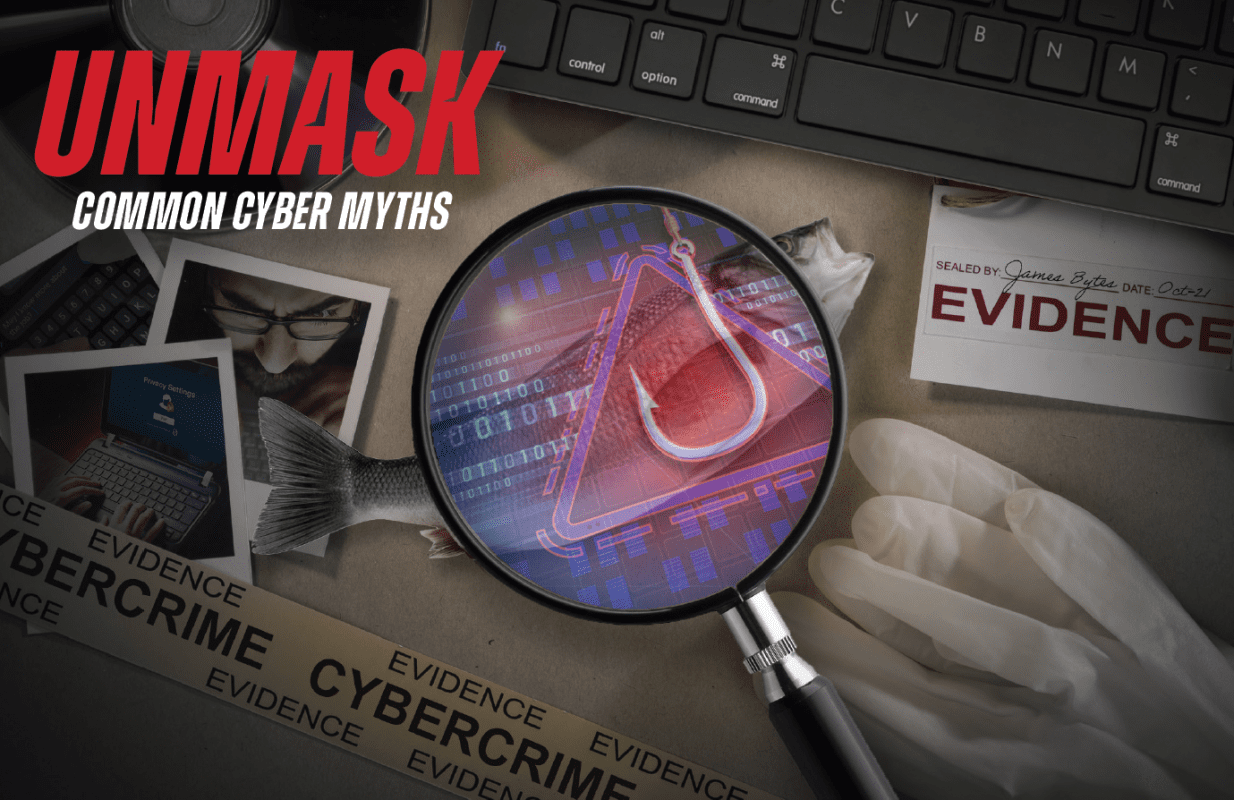
Myth Busting: Four Common Cybersecurity Myths

Four Common Cybersecurity Myths

As businesses become more digital, they face increasing online threats, from credential theft to complex ransomware attacks.

Protecting your organization from these dangers is essential, but if you’re not familiar with technology or cyber risks, determining the best defence strategy can be challenging. With so much conflicting information about cybersecurity, it’s important to separate myths from facts.

Understanding the real risks and how to mitigate them is crucial to securing your business. This blog will help you navigate the threat landscape and take steps to safeguard your company.

Common Cybersecurity Myths Exposed

Clearing up common misconceptions about cybersecurity is key to protecting your business:

Myth #1: Cybersecurity is a single solution

Cybersecurity is multi-faceted, involving more than just one protective measure. A strong defence includes employee training, physical security, and layered protections for networks and devices. Considering all these elements together will help build a comprehensive cybersecurity strategy.

Myth #2: Only large companies are targeted by cyberattacks

Believing this myth can be detrimental. In reality, small businesses are often easier targets because their defences are usually weaker, and they may struggle to recover from an attack unless they pay a ransom.

Myth #3: Antivirus software is sufficient protection

This is far from true. Antivirus software alone doesn’t protect against the full range of threats. Cybersecurity goes beyond basic antivirus tools—it requires awareness, preventative measures, and deploying various solutions to defend against evolving risks.

Myth #4: Cybersecurity isn’t my responsibility

Many believe that cybersecurity is solely the responsibility of the IT department or service provider. While IT plays a crucial role, employees are often the weakest link in security. Business leaders must ensure regular security training, and employees must follow good cyber hygiene practices to prevent attacks.

Debunking Common AI Myths in Cybersecurity

AI Myths

AI has become a hot topic, often stirring up a mix of excitement, scepticism, and even fear—particularly when it comes to cybersecurity. However, the reality is that when applied correctly, AI has the potential to transform how businesses operate and secure their systems.

To harness AI’s true potential, it’s important to separate fact from fiction. This blog will clarify some widespread misconceptions about AI in cybersecurity.

Uncovering the Truth About AI in Cybersecurity

There is plenty of confusion surrounding AI’s role in cybersecurity. Let’s clear up a few common myths:

Misconception: AI is a magical fix for cybersecurity

Reality: AI isn’t a cure-all for cybersecurity challenges. While it’s great at analysing data and identifying threats, it’s not an instant solution to every security problem. AI should be viewed as part of a broader cybersecurity strategy that includes task automation, threat detection, and support for your IT team.

Misconception: AI will make your business immune to attacks

Reality: Cybercriminals are constantly finding new vulnerabilities to exploit, including AI-based systems. AI alone cannot guarantee your business is immune to cyber threats. Think of AI as an advanced security layer that needs regular updates and the support of well-trained personnel to remain effective.

Misconception: AI is flawless and knows exactly what to do

Reality: Despite the hype, AI is not perfect. While AI technology is impressive, it’s still evolving, and there’s room for improvement. Some companies may overstate the capabilities of their AI security tools. The reality is that AI is not magic, but with time, it can improve and adapt to new challenges.

Misconception: AI operates entirely on its own

Reality: AI doesn’t work in isolation. Although AI is highly effective at identifying suspicious activities, human oversight is still essential. You need to set its parameters, assess its findings, and make final decisions on security matters. Sometimes, AI can raise false alarms, and it’s up to your security team to verify the real risks.

Misconception: AI is only for large enterprises with big budgets

Reality: AI-based security solutions are becoming more affordable and accessible to businesses of all sizes. With the rise of cloud-based AI services, even small and medium-sized companies can leverage AI without stretching their budgets.

By clearing up these myths, you can better understand how to use AI effectively in your cybersecurity strategy.

Empower your cybersecurity

Our IT experts can assist you in understanding your security needs, finding the right AI solutions for your business and ensuring they’re implemented effectively. Contact us today [email protected] for a free consultation and learn how we can keep your business safe in the digital age.

How Cybercriminals Leverage AI to Enhance Their Attacks

Cybercriminals

Running a business is already a tough task, and the rising threat of cyberattacks makes it even more challenging. Unfortunately, cybercriminals are now utilizing artificial intelligence (AI) to launch more advanced and sophisticated attacks aimed at stealing your data and disrupting your operations.

The good news is that there are effective measures you can take to safeguard your business. This blog will shed light on how hackers are using AI in their attacks and what steps you can take to protect your organization.

How Cybercriminals are Using AI

Here are some key ways hackers are exploiting AI to carry out cyberattacks:

Deepfakes

Cybercriminals use AI to generate convincing fake videos or audio recordings that mimic the voice or appearance of someone familiar, like your boss or a trusted colleague. These deepfakes can be used to deceive you into transferring money or revealing sensitive information.

How to spot it: Watch for subtle signs like odd facial movements or poor voice synchronization that might indicate a deepfake.

AI-Driven Password Cracking

AI allows hackers to crack weak or common passwords with ease. By harnessing the computational power of AI, attackers can automate password-guessing processes, attempting millions of combinations in a short time to breach accounts.

How to defend yourself: Use strong, unique passwords for all accounts, and consider using a password manager for better security.

AI-Enhanced Hacking

AI enables hackers to automate tasks that previously took hours or days, such as identifying system vulnerabilities. With AI, cybercriminals can create tools that not only find weaknesses but also develop new strains of malware designed to exploit them.

How to stay protected: Regularly update your security systems and software, and ensure that your systems are routinely scanned for potential vulnerabilities.

Supply Chain Attacks

In these attacks, hackers use AI to insert malicious code into legitimate software or vendor products. Once this compromised software is used in your systems, it can spread the malware and expose your business to risk.

How to protect yourself: Only download software from reliable sources and ensure that updates and patches are applied promptly.

Strengthen Your Defences

AI-powered cybercrime is a growing concern, but you can stay ahead of the curve by bolstering your security measures. Having a trusted IT partner can be your strongest defence. Partner with us to leverage cutting-edge technology and protect your business from emerging cyber threats.

Contact us today [email protected] for a free consultation and learn how we can keep your business safe in the digital age.