News Archives - DNA IT Solutions

Category Archives: News

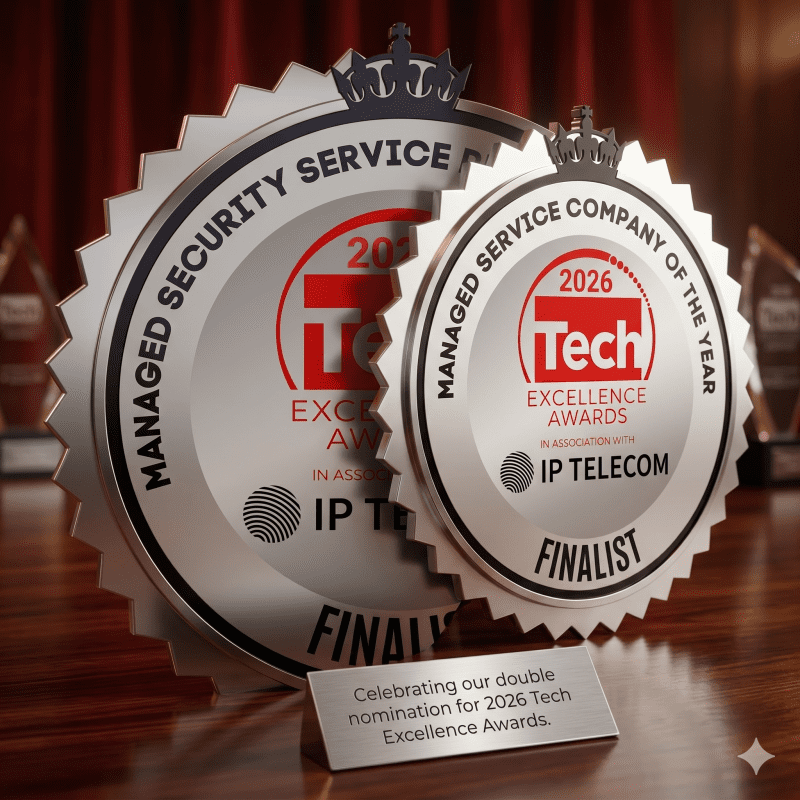
DNA IT Solutions shortlisted for two categories at TechExcellence Awards 2026

DNA have ben shortlisted in the MSP and MSSP categories of the TechExcellence Awards

DNA IT Solutions has been shortlisted for Managed Security Services Provider of the Year and Managed Service Company of the Year at the TechExcellence Awards 2026. Hosted by TechCentral.ie, the awards ceremony takes place on 14th May at the Royal Marine Hotel in Dublin.

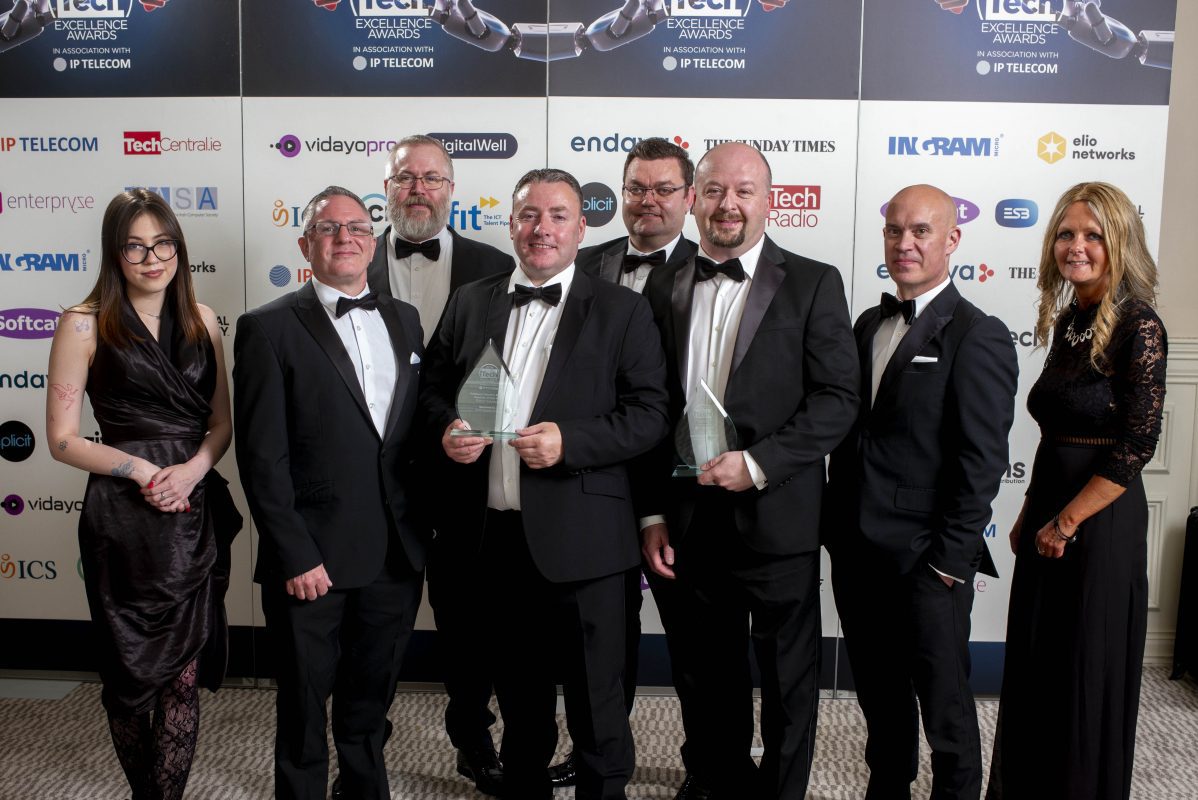
The nomination continues a strong run at the awards for the Blanchardstown-based company. DNA IT Solutions won Managed Security Services Provider of the Year in 2025 and 2024, and now returns as a shortlisted entrant in both categories simultaneously.

The TechExcellence Awards are widely regarded as the ‘Oscars’ of the Irish technology industry, recognising outstanding performance across managed services, security, cloud, and emerging technology.

The double shortlisting reflects DNA IT Solutions’ continued focus on delivering integrated IT, cloud, and security services to mid-market Irish businesses — organisations that carry the data risk and regulatory obligations of larger enterprises but need a provider built to serve them at their scale.

Declan Hussey, CEO of DNA IT Solutions, said:

“Winning back-to-back at the TechExcellence Awards is something we’re proud of, but the number that matters most to me is 10 years — our average client retention. That figure is earned by a team that shows up, knows their clients’ businesses inside out, and never treats a support call as just a ticket. This shortlisting belongs to them.”

The winners will be announced at the awards ceremony on 14th May. Further details at techawards.techcentral.ie.

We’ve Changed our Look to Reflect Growth Plans for 2026

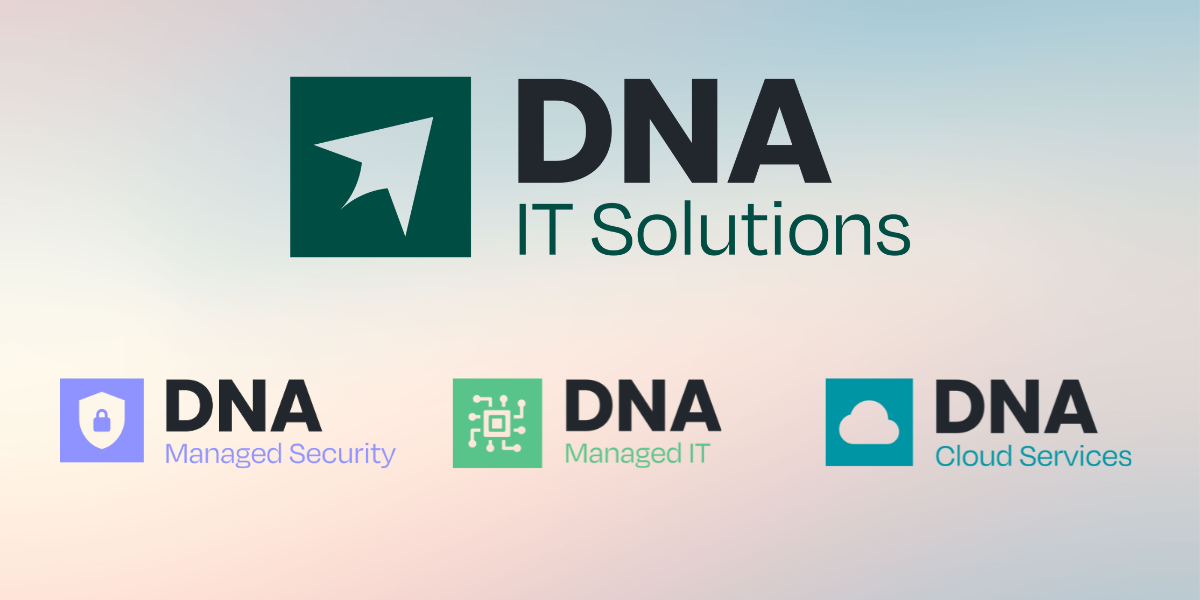
Set of new DNA IT Logos

We’ve refined our visual identity to better reflect who we are and how we work. The changes create clearer distinctions between our services whilst maintaining a unified brand presence.

This wasn’t about a design refresh or following the latest design trends; it was about solving a problem that had become impossible to ignore.

DNA IT Solutions has grown significantly. Three distinct service areas, each with its own complexity, each serving different client needs. Our old branding couldn’t handle this structure. Everything looked the same, whether we were discussing cloud infrastructure or security operations.

The solution required more than a new logo. We needed a system.

How the new identity works

We now have two logo types. The main DNA IT Solutions logo represents the company as a whole; you’ll see it on our website, in general communications, on business cards. Service logos appear only in materials specific to that service. If you receive a Managed Security proposal, it carries the purple shield logo. A Cloud Services presentation uses the aqua cloud logo. Managed IT materials display the green network icon.

This distinction matters when you’re deep in technical documentation or comparing different service offerings. The visual cue tells you immediately which domain you’re in.

The colour system follows the same logic. Our primary palette gives us Deep Charcoal as the foundation, with Deep Green and Emerald Green providing our core brand colours. These appear across everything we do. Then each service has its own secondary colour: purple for Managed Security, green for Managed IT, aqua for Cloud Services.

Open a security assessment report and you’ll see purple accents throughout. That same purple appears in security-focused social media posts, event materials, technical guides. The consistency creates recognition; over time, you’ll associate purple with our security practice before you read any text.

Typography anchors the system. Degular Semibold handles all headings and subheadings, giving us a distinctive voice across every touchpoint. Poppins Light serves as our body typeface, chosen specifically for clarity in technical documentation. These

What you’ll notice

These changes will roll out gradually across all customer-facing materials over the next quarter. Proposals will arrive with the new service logos. Our website and socials reflect the updated colour system. Email signatures, technical documentation, quarterly business reviews; everything will shift to the new identity.

You’ll see the main DNA IT Solutions logo on general communications, the service logos on specialist materials. Colour coding will become familiar quickly. Within a month, you’ll instinctively recognise which service area a document relates to before you process the content.

The fundamentals haven’t changed. You get the same great technical expertise and support commitment. We’ve simply created a visual language that matches how we actually work and how you actually engage with us.

This identity was built to scale. As we expand capabilities and add services, the system accommodates growth without losing coherence. That’s the difference between a logo and an identity system; one is decoration, the other is infrastructure.

What are your thoughts on our new identity?

How to Reduce Cyber Insurance Premiums: Security Measures That Lower Your Costs

This week, our Sales Manager, Andrew Pearsall had a fascinating conversation with a client about the evolving landscape of cyber insurance and how it’s increased in scope and importance over the years.

Up until very recently, the questions on the cyber insurance proposal form were relatively basic. However, as more and more security threats emerge, the questionnaire and the information required by clients to provide, has become more onerous.

Premiums continue to rise.

The cyber insurance market in Ireland is growing rapidly and according to PwC’s 2026 Global Digital Trust Insights report, 41 per cent of Irish organisations are looking to update cyber insurance to mitigate risk and build resiliency.

However, an insurance policy alone will not provide adequate protection in an environment where cyber threats are flourishing.

Proper cyber resilience is based on actionable, practical plans, underpinned by people, processes and technology solutions that support business continuity in the event of a breach.

It’s a stark finding from PwC’s survey that just 28% of Irish organisations have implemented robust cyber resilience actions, well behind their global counterparts at 33%.

In addition to this, less than one in 10 (8%) of Irish organisations invest significantly more on proactive cybersecurity measures than reactive measures, lagging well behind their global counterparts at 24%.

This raises the question: why spend money on being reactive after an incident, when you can invest in your cyber security and be proactive? You get more protection, at a reduced cost.

Key Takeaways:

  • Cyber insurance is no longer just about coverage – it’s about your proactive security posture.
  • Insurers are increasingly rewarding organisations that demonstrate strong cybersecurity frameworks.
  • A well-structured security wrap with DNA’s layered defence and 24/7 SOC team incident response can significantly reduce your premiums.
  • The process of completing insurance forms is a valuable exercise in identifying gaps and strengthening internal policies.
  • Testing is not an option; it’s an absolute must! DR Testing, Pen Testing all need to be done to make sure there’s no gaps

Advice for IT and Business Leaders

If you’re reviewing your cyber insurance this quarter, don’t just tick the boxes. Let’s use it as an opportunity to audit your security stack, align with best practices, and negotiate better terms. The stronger your defences, the better your coverage and the lower your costs.

DNA IT Showcases Award-Winning Managed Security Services at Cyber Security Summit

Dublin, 2nd October 2025 – DNA IT Solutions is pleased to announce that we will be exhibiting and showcasing our award-winning Managed Security Services at the Business Post Cyber Security Summit 2025, taking place today at Croke Park, Dublin.

The summit brings together leaders from government, industry and cybersecurity to examine how organisations can respond to growing threats, tightening regulation and the rapid rise of AI.

With the introduction of major EU legislation such as NIS2, the Digital Operational Resilience Act (DORA), the Cyber Resilience Act and the AI Act, the event will explore what these developments mean in practice, and how businesses can move beyond compliance to build lasting resilience.

What to expect at our stand

Our team will be on hand throughout the day to provide insights on building a rock-solid cyber security strategy:

  • Vulnerability and pen testing
  • Human risk management
  • Zero Trust
  • Managed Detection and Response
  • Threat Hunting and Dark Web Monitoring
  • Office365 Security Monitoring
  • Compliance Management

Why attend

The Business Post Cyber Security Summit provides a valuable opportunity to:

  • Hear from industry thought leaders and cybersecurity experts
  • Understand the practical implications of new EU regulations
  • Learn from sector-specific case studies
  • Network with peers facing similar challenges
  • Explore solutions that address real security gaps

As Ireland’s regulatory environment becomes more demanding and threat actors grow more sophisticated, organisations across all sectors need partners who understand both the technical and compliance landscapes.

Visit us at the Summit

If you’re attending the Business Post Cyber Security Summit, we’d welcome the opportunity to discuss your organisation’s security challenges and how DNA IT Solutions can support your compliance and resilience objectives.

If you can’t make the Summit today and would still welcome a conversation with one of our team please let us know here.


DNA IT Solutions Shortlisted for 4 Categories at the 2025 Tech Excellence Awards!

Tech Excellent Awards 2025

Big news!

We’re proud to announce that DNA IT Solutions has been shortlisted in not one, but four categories at the 2025 Tech Excellence Awards!

  • IT Project of the Year
  • MSP of the Year
  • MSSP of the Year
  • Marketing Excellence Award

In a fast-changing technology landscape, it’s incredibly rewarding to see our team’s hard work and dedication acknowledged at such a high level.
A huge thank you to our team, our clients, and our partners for being part of the DNA journey — we couldn’t have achieved this without you.

Looking forward to awards night!

Why Smart Tech Acceleration is Essential for Long-Term Business Success

In an effort to adapt to rapid technology advancements and evolving business landscapes, many companies have invested in solutions that may no longer align with their long-term goals. If this sounds familiar, you’re not alone.

Technology is advancing at an unprecedented pace, and businesses must move beyond short-term fixes to adopt smart tech acceleration—a strategy that ensures technology investments align with long-term business growth, security, and efficiency.

Why Staying Current with Technology Matters

  • Seamless Integration – Bringing all the right tools together boosts efficiency and reduces time wasted on disconnected systems.
  • Increased Productivity – A well-integrated IT environment enhances employee experience and streamlines operations.
  • Stronger Security – Removing outdated and unsupported technologies protects against cyber threats and compliance risks.

However, tech acceleration must be strategic—it’s not just about speed but about ensuring new technologies support business continuity, security, and growth.

What is Smart Tech Acceleration?

Many businesses made rapid tech decisions during the shift to remote work, adopting tools to ensure operational continuity. While these solutions may have worked short-term, they might not integrate well with existing infrastructure or align with current business needs.

It’s time to focus on a smarter approach to IT acceleration—one that:

  • Aligns technology with long-term business goals
  • Future-proofs IT investments with scalable solutions
  • Ensures seamless integration and operational efficiency

A growing number of organizations understand the importance of smart infrastructure, with investment in integrated IT solutions projected to increase by 40%. Companies that fail to modernize risk losing out to more tech-savvy competitors.

How Smart Tech Acceleration Supports Business Growth

  • Strategic Vendor Partnerships – Choosing IT providers that align with your business values and innovation roadmap prevents long-term challenges and ensures smooth transitions.
  • Seamless IT Integration – A well-connected IT environment reduces operational expenses, improves response times, and boosts productivity by ensuring all solutions work together efficiently.
  • Data-Driven Decision Making – Rather than adopting quick fixes, smart tech acceleration focuses on KPI improvements and long-term success metrics, ensuring real ROI on IT investments.

Without the right tech strategy, businesses risk falling behind. Investing in future-ready technology solutions is critical to achieving sustainable growth, security, and operational excellence.

Partner with DNA IT Solutions for Smart Tech Acceleration

Navigating IT modernization alone can be challenging, but with DNA IT Solutions as your trusted Managed Services Provider (MSP), you’ll have a security-first, strategic partner to guide your business toward success.

Find Out What’s Happening with Cyber Crime!

This exclusive event will showcase the latest developments in the world of cyber crime. Come to this threat intelligence education session and you will learn what the latest trends are, what the cyber criminals are now using to target businesses and who is most at risk.

Cyberattacks are growing more sophisticated and frequent, making proactive defense essential for businesses. This event will provide key insights into Threat Intelligence, helping organizations detect, analyze, and respond to cyber risks while ensuring compliance with security frameworks like NIS2.

AI is both a powerful tool and a growing risk in cybersecurity. Cybercriminals are increasingly exploiting trusted cloud services like Dropbox, OneDrive, and Google Drive to distribute malware and execute attacks. While dark web activity around SaaS platforms declined in 2024, Microsoft TeamViewer saw a 9% increase, highlighting the rising threat of SaaS-targeted cybercrime.

With generative AI and quantum threats on the horizon, securing your data, access controls, and AI-driven processes is more critical than ever. Join us for this essential session and take action to protect your business before it’s too late!

What You’ll Learn:

🔹 How Threat Intelligence can enhance your cybersecurity strategy
🔹 The latest threat trends and attack tactics used by cybercriminals globally, in Europe and by industry sector.
🔹 How to proactively defend against security breaches
🔹 The role of NIS2 compliance in securing your business

Event Agenda:

☕ 9:00 AM – 9:30 AM | Welcome Tea Break & Networking
Enjoy tea, coffee, and pastries while connecting with industry professionals.

🎤 9:30 AM – 11:00 AM |

9:30 AM – 11:00 AM | Keynote: The Rising Threat of Cybercrime – Are You Prepared?

Cybercriminals are evolving faster than ever, using sophisticated tactics to breach businesses of all sizes. This session will uncover the latest cybercrime trends, real-world attack strategies, and how Threat Intelligence can help you stay ahead of emerging threats before they strike.

Don’t wait until it’s too late—equip your business with the knowledge to defend against modern cyber threats.

☕ 11:00 AM – 11:15 AM | Tea Break
Recharge with refreshments and cookies.

🛡️ 11:15 AM – 12:00 PM | NIS2 Compliance & Cybersecurity Best Practices
Discover how to align your security posture with NIS2 regulations and reduce your business’s exposure to cyber risks.

🔚 12:00 PM | Event Conclusion & Final Networking Opportunity

Who Should Attend?

This event is perfect for IT decision-makers, security professionals, and business leaders looking to strengthen their cybersecurity strategy and stay compliant with evolving regulations.

🚀 Join us for an insightful session and take your cybersecurity to the next level!

Experience the future of work today with Microsoft Copilot: Your AI-powered everyday assistant

Microsoft Copilot

In today’s dynamic and rapidly evolving workplace, staying efficient and productive is essential for success. Microsoft Copilot, an innovative AI assistant crafted to transform how we work and collaborate. Seamlessly integrated into Microsoft 365 applications, Windows, and Edge, Copilot leverages advanced generative AI technologies, including OpenAI’s GPT-4, to simplify tasks, enhance collaboration, and unlock new levels of creativity.

Here’s a closer look at how Microsoft Copilot is shaping the future of work and why it’s a game-changer for individuals and organizations alike.

What Is Microsoft Copilot?

At its core, Microsoft Copilot is a conversational AI assistant that transforms how we interact with technology. By embedding AI into familiar tools like Word, Excel, PowerPoint, Teams, and Outlook, Copilot enhances productivity, creativity, and decision-making. Whether you’re drafting an email, summarizing a report, analysing data, or creating visuals, Copilot is there to assist.

Key Features of Microsoft Copilot

  1. Enhanced Communication and Content Creation
    Gone are the days of staring at a blank page. With Copilot, you can draft professional emails, generate creative content, and even summarize lengthy documents with ease. For instance, you can ask, “Summarize this report into three key points,” and Copilot delivers an accurate, concise summary in seconds.
  2. Seamless Integration Across Microsoft Tools
    One of Copilot’s standout features is its deep integration with Microsoft 365 applications. Imagine working on a spreadsheet in Excel, chatting in Teams, or drafting a presentation in PowerPoint—Copilot is right there, ready to help. By grounding AI responses in your organization’s proprietary data, Copilot also delivers tailored insights, ensuring relevance and accuracy.
  3. Workflow Optimization and Task Automation
    Repetitive tasks take up valuable time that could be spent on strategic work. Copilot automates these tasks, such as scheduling meetings, organizing data, or enabling system settings like Do Not Disturb mode. This allows you to focus on what truly matters.
  4. Creative and Visual Capabilities
    Need visuals on demand? Copilot can generate images based on prompts or help design branded content. Whether it’s for marketing campaigns or presentations, Copilot’s creative capabilities make it an invaluable asset for teams that need fresh, impactful visuals quickly.
  5. Data-Driven Insights
    Copilot empowers decision-making with advanced AI analytics. It can analyse data, create detailed charts, and deliver actionable insights. For example, you can ask Copilot to “Identify sales trends for Q1,” and it will provide a clear, data-backed summary to guide your decisions.

 Why Microsoft Copilot Stands Out

  1. Enterprise-Grade Security
    Microsoft ensures that customer data used with Copilot is secure. It adheres to Responsible AI Standards, meaning your data remains private and is not used to train AI models. This commitment to transparency, accountability, and compliance gives organizations confidence in adopting Copilot.
  2. Tailored for Business Needs
    Microsoft Copilot is designed with flexibility in mind. Businesses can customize Copilot to align with their specific workflows, ensuring it meets unique industry requirements. From sales and marketing to customer service and IT, Copilot’s functionality adapts to various sectors.
  3. Boosting Efficiency and Reducing Costs
    By automating repetitive tasks, Copilot saves time and reduces operational overhead. This makes it a cost-effective solution for businesses aiming to enhance productivity without increasing workload.

Real-World Use Cases

  1. Streamlined Project Management
    Teams can use Copilot in Microsoft Teams to assign tasks, track progress, and summarize meeting notes. This ensures everyone is aligned and projects move forward efficiently.
  2. Enhanced Learning and Training
    Organizations can leverage Copilot to create training materials, generate course content, and even track employee learning progress, fostering a culture of growth and development.
  3. Creative Content Generation
    From marketing proposals to presentation designs, Copilot helps professionals create polished content quickly, freeing up time for strategy and innovation.
Getting Started with Microsoft Copilot

Implementing Microsoft Copilot requires an understanding of how it integrates with Microsoft 365 and existing workflows. By exploring its features and aligning them with your goals, you can unlock its full potential.

Whether you’re a small business looking to boost efficiency or a large enterprise aiming to empower employees, Microsoft Copilot is an AI companion that transforms work. It’s not just a tool—it’s a partner that helps you achieve more, faster.

As workplace technology continues to evolve, embracing tools like Microsoft Copilot is key to staying ahead. With its powerful AI capabilities and seamless integration, Copilot isn’t just changing the way we work—it’s reimagining it entirely.

Strengthening Your Incident Response Plan

Incident Response Plan

Are you ready to handle a cybersecurity breach, natural disaster, or system failure?

Unexpected disruptions can occur at any time, leaving businesses in turmoil. However, with a well-prepared incident response plan, you can navigate these challenges confidently and minimize the impact.

This guide is designed to help you enhance your incident response plan in a straightforward and effective manner. Let’s explore how you can ensure your organization is ready to tackle any unexpected incident.

Best Practices for a Robust Incident Response Plan

To effectively prepare for potential incidents, follow these essential steps:

  • Identify and Prioritize Critical Assets:
    Understanding your resources and their importance enables efficient allocation during an incident, reducing downtime and mitigating damage.
  • Build a Dedicated Response Team:
    Assemble a cohesive, well-trained team with defined roles to ensure swift and coordinated responses to any incident.
  • Provide Regular Training:
    Ongoing training equips your team with the latest knowledge and techniques, ensuring they’re confident and capable in any scenario.
  • Implement Continuous Monitoring:
    Early detection of issues through robust monitoring systems can prevent incidents from escalating into significant disruptions.
  • Establish Clear Communication Protocols:
    Ensure smooth communication within the team and with external stakeholders to avoid confusion and facilitate a coordinated response.
  • Create a System for Incident Categorization:
    Classify incidents by their severity and impact, enabling a tailored response to minimize long-term effects on your organization.

How We Can Assist

Not sure where to start with incident response planning? Our expertise can help you design and implement a comprehensive plan tailored to your needs:

  • We’ll develop a customized incident response plan aligned with your goals and unique challenges.
  • Our team will identify vulnerabilities and rank priorities through detailed risk assessments.
  • We’ll help you establish a skilled incident response team with clearly defined responsibilities.
  • Advanced security technologies will be applied to improve detection and responsiveness.
  • Continuous monitoring systems will be implemented to detect potential threats early.
  • Your plan will comply with all legal and regulatory requirements, ensuring peace of mind.
  • We’ll conduct post-incident analysis to refine your plan based on valuable lessons learned.

Secure Your Business Before It’s Too Late

A well-crafted incident response plan is essential to maintaining business continuity and minimizing the impact of unexpected disruptions. By taking proactive steps and following best practices, your organization can handle incidents effectively and reduce potential risks.

Start evaluating your current strategy today and ensure your team and systems are ready to respond confidently to any situation. Preparedness is key to resilience.


Top 5 Tech Trends That Defined 2024 and Predictions for 2025

Tech Trends and Predictions

As we close the chapter on 2024, it’s clear that this year was a turning point for technological advancements across industries. From breakthroughs in artificial intelligence to the rising importance of sustainable software practices, the past year reshaped businesses and paved the way for further innovation. Reflecting on the tech trends and predictions that shaped 2024, we also turn our gaze to 2025, where new opportunities and challenges are set to emerge.

  1. The AI Boom: Generative and Conversational AI Took Centre Stage

In 2024, artificial intelligence solidified its place as a transformative force across industries. Generative AI tools like ChatGPT matured further, driving efficiencies in creative processes and reshaping sectors such as healthcare, retail, and logistics. AI-powered systems generated text, images, and even design solutions, saving time and optimizing workflows.

Conversational AI reached new heights, with chatbots and virtual assistants becoming more human-like in their interactions. This technology played a pivotal role in enhancing customer experiences, especially in healthcare and e-commerce, where it streamlined patient engagement and automated customer support.

Prediction for 2025:
Next year, we anticipate AI evolving into hyper-personalized tools tailored to niche industries. Generative AI is expected to integrate seamlessly into enterprise systems, enhancing decision-making through real-time data analysis. Additionally, ethical AI practices will gain traction, addressing concerns about bias, transparency, and data privacy.

  1. Cybersecurity: A Year of Resilience and Lessons

2024 brought heightened awareness of cybersecurity risks. While many companies implemented stronger measures, the persistence of ransomware attacks highlighted the need for continuous vigilance. The year saw significant progress in IoT security, with emerging protocols addressing vulnerabilities in interconnected devices.

A critical lesson from 2024 was the importance of building a culture of cybersecurity. Organizations invested in employee training to recognize and mitigate cyber threats, while also adopting cutting-edge technologies to safeguard their data and networks.

Prediction for 2025:
As cybercriminals become more sophisticated, cybersecurity will rely heavily on AI-driven defences. Expect the emergence of self-learning systems capable of detecting and responding to threats in real time. Moreover, with quantum computing on the horizon, companies will need to revisit encryption standards to stay ahead of potential risks.

  1. Green Coding: A Commitment to Sustainability

Sustainability in software development became a major focus in 2024. Green coding practices, emphasizing energy-efficient and eco-friendly software, gained momentum. Many tech companies, including Meta and IBM, committed to net-zero emissions, demonstrating the industry’s shift toward responsible innovation.

Consumers, increasingly prioritizing sustainable products, influenced businesses to rethink their development processes. Green coding pushed software engineers to optimize applications for minimal energy consumption, aligning technological progress with environmental goals.

Prediction for 2025:
The momentum for green coding will continue to grow, with governments potentially introducing regulations to enforce sustainable software practices. Innovations in energy-efficient hardware and cloud computing infrastructure are also expected to support this shift.

  1. The Evolution of Software Development

Software development in 2024 was marked by a growing reliance on AI and machine learning. Developers increasingly leveraged AI tools for code generation, testing, and debugging, resulting in faster time-to-market for software products.

The year also saw organizations tackling the talent shortage by turning to staff augmentation and outsourcing partnerships. This approach allowed businesses to access skilled developers quickly and scale their operations efficiently.

Prediction for 2025:
In the coming year, software development will see even greater integration of AI in the entire lifecycle—from ideation to deployment. The demand for specialized roles, such as AI/ML engineers and DevOps professionals, will continue to rise. Moreover, low-code and no-code platforms will gain traction, democratizing development and enabling non-technical users to contribute to software creation.

  1. Industry Cloud Platforms: Custom Solutions Took the Lead

In 2024, industry-specific cloud platforms emerged as game changers, offering tailored solutions to address the unique challenges of sectors such as healthcare, manufacturing, and retail. These platforms provided pre-configured applications that enhanced operational efficiency and ensured compliance with industry regulations.

The integration of AI, IoT, and blockchain technologies into these platforms enabled businesses to gain deeper insights and streamline their processes. For example, healthcare platforms improved patient data management, while manufacturing platforms optimized supply chains and predictive maintenance.

Prediction for 2025:

Industry cloud platforms will become even more sophisticated, incorporating advanced predictive analytics and automation capabilities. As more businesses transition to these platforms, we expect a greater focus on interoperability and the adoption of multi-cloud strategies to avoid vendor lock-in.

Reflections on 2024 and What Lies Ahead

2024 will be remembered as a year of technological resilience, innovation, and adaptation. From the rapid evolution of AI to the growing emphasis on sustainability and cybersecurity, the trends of the past year have set the stage for exciting developments in 2025. Businesses that stay agile and embrace these advancements will be better positioned to thrive in an increasingly competitive digital landscape.

As we move into 2025, the key to success will be balancing innovation with responsibility. Organizations must not only leverage cutting-edge technologies but also address ethical considerations, sustainability goals, and the evolving needs of their customers. By doing so, they can navigate the future with confidence and purpose.