December 2017 - DNA IT Solutions

Monthly Archives: December 2017

Are you a high-impact business?

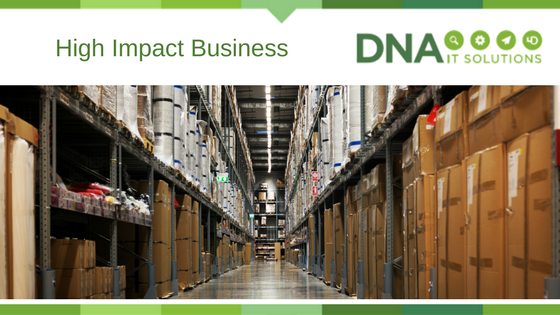
High impact business DNA IT solutions

In a modern business, your IT systems are your lifeblood.

You need them to interact with customers, store your data, complete your work, and without them functioning properly, it all comes crashing down. So what have you got in place in case this happens? Could your business recover from losing a day’s work, or even more?

Protecting your IT Systems

We’re getting ahead of ourselves. Protecting your IT systems against fault isn’t a reactive measure, and a good IT professional will make sure that there are already plans in place to get up and running as soon as possible. That’s why it’s vital to have a forward-thinking IT services provider in place, well ahead of time. At DNA IT Solutions, we specialise in disaster recovery, so that our clients can maintain business continuity even if the worst happens.

By working out where you are now, we can see where you need to be in future to have as much security as possible against IT disasters. Our process begins here, thoroughly assessing your IT infrastructure, before setting out a plan of action that will get you where you need to be. Each solution is bespoke, and we can work with whatever you have, even migrating disparate hardware, software and network services into the new system.

The Right Technology

Once we have this nailed down, we can find the best option to get you up and running as soon as possible once a problem strikes. We find you the right technology for the job and integrate it into our plans – whether it’s new hardware, software or a cloud-based solution – and we’ll take you through the process every step of the way, from specification to sign-off. By minimising downtime, we can save you stress and money, and maybe even save your business.

Once we’ve got the solution you need in place, we won’t abandon you. We have Managed IT Services packages that have us at your side 24/7 to get you through whatever problems come your way and help you transition smoothly into the new way of working, sorting out teething problems and making sure everything works as well for your needs as possible.

How a data centre works

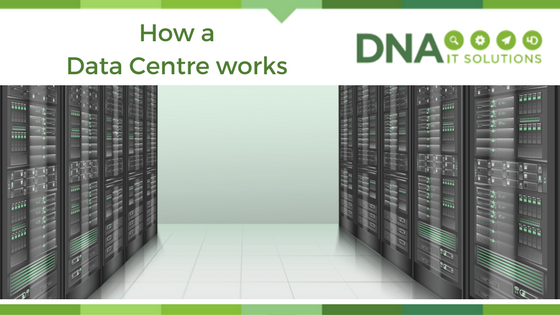
How a data centre works DNA IT

A data centre is a centralised location where computer and networking equipment is stored for the purposes of collecting, processing and storing data. Organisations dealing with sensitive data will use such centres for security purposes, ensuring that a backup of all data is securely stored.

Why are data centres necessary?

The loss of data can result in the loss of revenues and consumer confidence and, in many instances, it can constitute a breach of the law. As companies of all sizes become increasingly data reliant and data hungry, the demand for storage space and processing power often outstrips the ability of said companies – particularly those classed as small-medium enterprises – to deliver on obligations to protect, back up and process data.
While it’s easy to dismiss the data centre as an additional security feature, it’s a fact that secure and rapid access to data is critical for all enterprises. Interruptions to the flow of data can bring a business to its knees if there is no effective backup strategy in place.

Picture the scenario without a sufficient backup solution in place: a system failure means that the office server goes down. CRM system databases are inaccessible. Accounts packages can’t be used to process payments. And, worst of all? All of your data is gone – that’s notes about previous and prospective customers and clients, their names and addresses, transaction histories and more.

The data centre solution

Many of us conceptualise data centres as staid rooms full of server racks humming and blinking away, but the truth is that they come in all manner of sizes, shapes and configurations. Many cloud providers offer secure private data centres to business customers and there are many positive reasons to opt for cloud-based backups.

Firstly, cloud-based solutions are based off-site. This provides additional security in the event of damage to a building (for example, flooding or fire) and in the event of hardware theft. Furthermore, cloud-based data centres can be remotely accessed, providing users with connectivity, even when on the move.

If your business is lacking a tried and tested data centre solution, why not consider contacting DNA IT Solutions? Our experienced team can talk you through secure, business-oriented data centre solutions suitable for enterprises of all sizes, across all industries.

GDPR – Understanding the Data Protection requirements and how to comply

GDPR DNA IT Solutions

The modern office looks a lot different than it did the last time a law was passed on data protection.


We now use more mobile devices in our work and personal life.  Company data is no longer just stored with the walls of an office as we move towards storage in the cloud.

With personal data breaches quite common, this not only puts people at risk of identity theft and financial loss but also puts businesses at risk of losing customer confidence.  Now that GDPR is being introduced next year the consequences will be even more severe with hefty fines.

Sophos recently published a whitepaper on the subject and you can read the full version here.  DNA IT Solutions partner with Sophos to provide an all-round solution to business IT Security and we felt it would be useful to share some of their insights with you.

Why are the changes needed?

It was recognised that there was a need to address the protection of data due to the major technological developments in the past 20 years. GDPR takes the form of a regulation, meaning that it applies directly in every member state in the form in which it was passed. The regulation is intended to strengthen the privacy rights of EU citizens, restore confidence in online activities and better protect customer data by requiring companies to adopt new data protection processes and controls.

Significant elements of reform

GDPR addresses the security of processing data and how organisations need to implement appropriate security measures to protect personal data. It makes specific reference to ‘encryption of personal data’ as one of the means to achieve this.  In regard to encryption technology, this means having a robust key management procedure in addition to encrypting your data. The wider implications are having a sound disaster recovery plan in place.

The consequences

Failure to comply could mean files of up to €20million or 4% of the total turnover whichever is higher. If you don’t put the right technology in place to protect personal data, then you may have to pay – directly to the supervisory authority and indirectly from reputation damage, and loss of goodwill and customer trust. However, companies that encrypt their data protect their customers and themselves.

How Sophos helps you meet the data protection challenge

A solid data protection strategy isn’t built in a day. But consider that 57% of data breaches are due to hackers or malware and 23% of data breaches are caused by unintended disclosure (human error). Securing against these threats is a great place to begin and Sophos recommends three steps to achieve it.

  1. Stop the top causes of data loss

Malicious attacks and accidental loss or theft are two major causes of data breaches. Sophos Central Device Encryption is the easiest way to manage full disk encryption for all your PCs and Mac computers centrally. Full disk encryption is the most basic form of encryption and it’s widely recommended that all computers use it to protect data at rest. It will keep your data secure in the event that a device is lost or stolen.   Sophos Mobile extends similar protection to data on your mobile devices.

Sophos Intercept X works alongside your existing antivirus protection to provide advanced anti-malware, anti-exploit and anti-ransomware protection – keeping you safe from the latest data-stealing attacks.

  1. Stop threats at the door

With todays’ increasingly sophisticated and aggressive malware attacks, having a multi-layered security setup that can stop attacks at every level of your network is essential. XG Firewall protects your network devices by stopping these attacks at the perimeter, before they get to your devices.

Sophos Email Appliance automatically blocks or encrypts sensitive emails and attachments (e.g. PDFs) ensuring your data is always protected, and suspect emails are stopped before they reach your users’ inboxes.

  1. Stop human error

Most of us have sent an email to the wrong person at some point. But when sensitive data is involved that innocent mistake can become a costly fine. The file-level encryption delivered by Sophos SafeGuard means that even when data leaves your devices or network (e.g. email attachment, cloud storage) it stays protected – so even if you suffer a data breach the chance of a fine is greatly reduced.


DNA IT Solutions have already put in place many of the measures that Sophos refer to for our clients.  If you want to find out more about how Sophos can protect your business, please get in touch with us today.