News Archives - Page 3 of 11 - DNA IT Solutions

Category Archives: News

7 Elements of an Effective Defense in Depth Strategy

7 ELEMENTS OF AN EFFECTIVE DEFENSE IN DEPTH STRATEGY

WHAT IS DEFENSE IN DEPTH (DiD)?

With cyberattacks growing in frequency and sophistication, businesses like yours are susceptible to data breaches now more than ever, irrespective of their size and industry. As you grow digitally and handle increasingly greater volumes of sensitive data, cybercriminals are constantly looking for ways to penetrate your defenses.

To effectively defend your business against today’s sophisticated threats, amplifying your organizational security is critical. With that in mind, adopting a Defense in Depth (DiD) strategy could be exactly what you need to improve your cybersecurity posture and keep malicious cyberthreats at bay.

In simple terms, DiD is a cybersecurity approach in which multiple defensive methods are layered to protect an organization. Since no individual security measure is guaranteed to endure every attack, combining several layers of security is more effective.

This layering approach was first conceived by the National Security Agency (NSA) and is inspired by a military tactic of the same name. However, in IT, the approach is intended to prevent an incident and not delay it, as in the military.

Remember not to confuse DiD with another cybersecurity concept called layered security. While layered security uses different security products to address a particular security aspect, such as email filtering, DiD is more comprehensive and includes multiple security measures to address distinct threats related to the entire IT infrastructure.

KEEP AN EYE ON THESE THREATS

All businesses, irrespective of their size and industry, can fall prey to malicious
attacks. Listed below are 23 cybersecurity threats you should be aware of:

Malware (abbreviated from malicious software) is a generic term for viruses, trojans and other dangerous computer programs used by cybercriminals to severely damage an IT environment or gain access to business-critical data. These programs may propagate via email attachments, website downloads or by exploiting the gaps in your operating system or other software.

Ransomware is a type of malware that threatens to disclose sensitive data or blocks access to files/systems, most of the time by encrypting it until the victim pays a ransom amount within a stipulated deadline. Failure to pay on time can lead to data leaks or permanent data loss. Even if you pay, there’s no guarantee that you will recover your lost data or won’t be exploited in the future.

Insider threats originate from within the targeted business. They could be past workers, suppliers or other business partners who have access to critical business data and computer systems, and they knowingly or unknowingly misuse their access. An insider threat is challenging
to identify since it comes from within the organization.

These attacks are common and easy to implement. When DoS or DDoS attacks happen, hackers flood the targeted system with a high volume of data requests, causing it to slow down, crash or shut down. An abrupt slowdown or unavailability of a website or service is the most evident sign of a DDoS assault.

Credential theft involves the unlawful acquisition of information that an individual or business uses to access websites and sensitive data. Credential theft lets hackers reset passwords, lock the victim’s account, download private data, gain access to other endpoints within the network or even erase sensitive data and backups.

Phishing is a type of social engineering attack in which hackers appear as reliable sources to trick victims into opening phony emails or SMSs so they can penetrate those networks. Business email compromise
(BEC) is a scam where cybercriminals
use compromised or impersonated email accounts to manipulate victims into transferring money or sharing sensitive information.

Cloud jacking, or cloud hijacking, is a type of attack where cybercriminals exploit cloud vulnerabilities to steal the information of an account holder to gain server access.

A MITM attack takes place when an unauthorized entity breaks into a company’s network and behaves as part of the network. It’s a form of eavesdropping in which the attacker intercepts the entire conversation and controls it from the inside. Hackers do this to capture and manipulate sensitive personal information in real-time, such as personal login information, account details and credit card numbers.

A DNS attack is a threat in which the hacker exploits vulnerabilities in the DNS protocol. This is a significant problem in cybersecurity because DNS is a vital component of the IT infrastructure. Hackers often target the servers that host domain names in DNS attacks. In other instances, these attackers will aim to identify flaws in the system and exploit them for their own gain.

Botnets are networks of hijacked, interconnected devices that are manipulated for scams and cyberattacks. A botnet attack is usually conducted by sending spam, stealing data, exploiting sensitive information or launching a vicious DDoS attack.

Hackers use a victim’s computing power to secretly and illegally mine cryptocurrency. Cryptojacking can target individual users, big enterprises and even industrial control systems (ICS). Whatever the method of transmission, cryptojacking code usually operates covertly in the background as unwitting victims use their devices as usual.

This cyberattack aims at stealing classified data from a corporate house or the government for financial, political or competitive advantages. Most cases of cyberespionage are classified as advanced persistent threats (APTs). An APT is a sophisticated cyberattack in which a hacker infiltrates a network without being discovered to acquire critical information over an extended period.

AI and ML help hackers become more efficient in developing an in-depth understanding of how businesses guard against cyberattacks. Using machine learning, hackers can tailor phishing emails to avoid bulk email lists and optimize them to encourage engagement and clicks. To give the interaction the best possible legitimacy, hackers even generate realistic images, social media personas and other content using artificial intelligence.

The adoption of IoT is undoubtedly on the rise. However, due to unregulated data exchange and insufficient legislation, IoT has become a favorite target for cybercriminals. Threat actors’ ability to harm not only the network and software that enable IoT devices, but also the devices themselves, is a significant source of concern regarding the security of IoT devices.

Vulnerabilities within web applications allow hackers to gain direct access to databases to manipulate sensitive data. Business databases are regular targets because they contain sensitive data, including Personally Identifiable Information (PII) and banking details. Common web application attacks include DDoS, SQL injections, path traversal, cross-site scripting and local file inclusion.

An APT is a sustained and sophisticated cyberattack in which a malicious actor gains access to a network and continues undetected for a prolonged duration. Most of the time, it aims at stealing data rather than damaging the IT environment. These persistent attacks are frequently orchestrated by nation-states or criminal cartels.

SQL injection is a code injection technique in which hackers place malicious code in SQL statements. This technique can destroy a database. A successful attack might lead to the illegal access of user lists, the deletion of entire tables and, in some circumstances, the attacker obtaining administrative rights to a database.

Zero-day exploits are cyberattacks aimed at vulnerabilities that a software vendor has not yet fixed or patched. By exploiting such an unpatched vulnerability, these attacks have a significant chance of success and are tough to protect against by using outdated security tools.

Spyware is software that, if installed on your computer, stealthily monitors your online behavior without consent. It can gather information about an individual or business and transfer that data to other parties. You can protect your business from spyware by using defenses like secure email and web gateways, automatic software patch management and regular employee awareness training on security.

Identity theft is a type of fraud in which a cybercriminal creates a fake account/profile like a genuine one in order to carry out scams like money laundering. Synthetic identity theft is a form of identity theft in which scammers combine real and fake information to create a new false identity. Most often, the crimes frequently go unreported or unobserved until the fraudster commits any fraud.

A software vulnerability is a flaw present within software or in an operating system (OS). They can enter your network through various channels, some of which are the fault of the software vendor and others that are the fault of the user. Almost all software will have vulnerabilities in one form or another that must be fixed before cybercriminals rush to exploit them.

A deep fake is a cyberthreat that uses artificial intelligence to manipulate or generate audio/video content that can deceive end users into believing something untrue. To make their messages seem more credible, scammers now leverage AI to create realistic looking user profiles, photographs and phishing emails.
The initial overlaying of 5G technology will be over the existing 4G LTE network. Because of this, there will be vulnerabilities that the new technology will inherit from its predecessor.

DEFEND AGAINST THREATS BY IMPLEMENTING A DiD STRATEGY

You can categorize DiD into three security control areas:

Your business’s policies and procedures fall under administrative controls. Make sure to document your policies and procedures to ensure that the security guidelines are available and adhered to. Whether it’s employee onboarding protocols, data processing and management procedures, information security policies, vendor risk management, third-party risk management frameworks or information risk management strategies, you should have clearly defined policies for all.

Your business’s hardware or software intended to protect your systems and resources falls under technical controls. Examples of technical controls are firewalls, configuration management, disk/data encryption, identity access management (IAM), vulnerability scanners, patch management, virtual private networks (VPNs), intrusion detection systems (IDS), security awareness training and more.

Anything aimed at physically limiting or preventing access to your IT systems falls under physical controls. Examples are fences, keycards/ badges, CCTV systems, locker rooms, trained guard dogs and more.

7 ESSENTIAL ELEMENTS OF DiD

Here are seven key elements that must be a part of your DiD strategy:

1

FIREWALLS

A firewall is a security system comprising of hardware or software that can protect your network by filtering out unnecessary traffic and blocking unauthorized access to your data. Other than blocking unwanted traffic, firewalls can also prevent malicious software from infecting your network. Firewalls can provide various levels of protection, so you must select the level of protection your business needs.

2

INTRUSION DETECTION AND
PREVENTION SYSTEM (IDPS)

IDPS monitors your network traffic, evaluates it and provides instant resolution whenever it spots any malicious behavior. Additionally, it monitors your network for any anomalies around the clock, and it notifies the stakeholders and blocks attacks if any suspicious activity is discovered.

3

ENDPOINT DETECTION AND RESPONSE (EDR)

EDR solutions operate by constantly monitoring endpoints to find suspicious or malicious behavior in real time. This is effective against internal and external attacks and is powered by innovative technologies such as machine learning.

4

NETWORK SEGMENTATION

When you divide your business’s network into smaller units, you can monitor data traffic between segments and safeguard segments from one another. Additionally, by automating the process, you can restrict unauthorized entities from accessing vital information.

5

THE PRINCIPLE OF LEAST PRIVILEGE (PoLP)

PoLP is a cybersecurity idea in which you provide users only the access they need to carry out their tasks. You can safeguard privileged access to resources and data that are important to your business by using this information security best practice.

6

STRONG PASSWORDS

Poor password hygiene, including the use of default passwords like “1234” or “admin,” put your business at risk. Equally risky is the habit of using the same passwords for multiple accounts. It’s essential to have strong passwords and an added layer of protection by using practices such as multifactor authentication (MFA).

7

PATCH MANAGEMENT

Poor patch management might leave security holes that can expose your company to cyberattacks. Do your employees manually patch software updates or deal with the hassles of outdated on-premises patch management solutions during working hours? It’s time to transition to automated patch management if you want to increase security and boost employee productivity.

Data Centres

How a data centre works DNA IT

With words such as flexible and scalable, a data centre solution should be tailor made to fit your requirements. Storage should be cost effective with you only paying for what you need, when you need it. Welcome to this introduction to data centres brought to you by DNA IT Solutions. This guide is one of a series that we hope will be useful to give you an insight into what you can do to help make the right IT decisions.

What is a Data Centre?

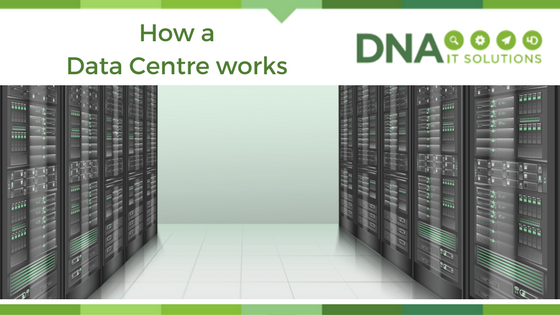
A data centre is more than a facility used to house computer systems it can be the brain of company. Most critical processes are run in the data centre so it is important that your choice of data centre meets your requirements. A data centre houses servers, storage devices, cables and a connection to the internet and allows your IT infrastructure to function efficiently.

We have come a long way in the past 80 years from when a single computer would fill a complete room. In the modern office today our IT equipment is more powerful than ever. In any sizeable organisation there is a need for a dedicated area to store and manage the IT hardware. In smaller businesses that may result in a ‘server room’ within the building itself or as a company grows it will evolve to using an external data centre.

The Brain of the Business

This data centre facility will be the place where the organisations IT operations are centralised. It will be a place that stores and manages data that is crucial to the day to day workings of the business. A data centre will provide a cloud solution for the organisation where they can run systems and store data with great flexibility and scalability. It really is the choice for the modern enterprise with ambition for growth.

Secure

The security of the data centre will be of concern and that is why we only offer solutions that are tried and tested and up to our high standards. The right environment must be in place to protect from theft and ensure protection of hardware.

The building itself must be secure and well protected to prevent unwanted visitors. It should provide an environment that has proper cooling systems in place to prevent overheating and keep temperature and humidity at consistent levels. Data centres need great power to operate and systems in place should power fail. We would also expect procedures in place for natural disasters such as fire, flood or storm.

There will be critical hardware and software on the premises so backups are vital. We would expect the onsite team to have both the expertise and the experience to perform the tasks necessary.

Technicians and maintenance staff will need access to the server rooms but that should be tightly controlled. Security systems that include biometric access, perimeter control and video surveillance systems will be standard in the data centres. An effective data centre will have invested in both the facility and the equipment housed to ensure a robust security system.
High Standards

Standards need to be high for a modern data centre and it would be expected to provide:

Always Available

Organisations need 24-hour access to information for 365 days a year. Downtime is not an option for most business so we should expect Uptime to be over 99% and as near to 100% as possible. A company needs its IT systems at all times so it is vital that there is guaranteed availability of cloud applications running in the data centre. This level of performance is both expected and achieved by the partners we work with.

Power Uninterruptible Power Sources including battery banks and generators should be in place in the event of a power failure occurring. The UPS will ensure that the power remains constant without any breaks. It will compensate for fluctuations in voltage and frequency and protect the sensitive computer electronic components and systems. Data centres will also have a redundant power supply. This enables repairs on one network without having to turn off servers, databases, or electrical equipment.

Environment

Data centres need the correct internal environment control. This includes computer room air conditioners, heating, ventilation, air conditioning and exhaust systems. The many processors and electronic components will naturally generate heat and if this is not dissipated there is a danger that they could fail. The correct cooling equipment must be in place to prevent this and the power to run this is considerable. Normally the cool air is blown through holes in the floor and it flows around the racks in a measured way to counteract the heat from the servers. The warm air is then removed by the air conditioning system

Equipment

A data centre will be a building filled with equipment and that hardware should be of a high quality and fit for purpose. Equipment for IT operations and storage of the organisation’s data including servers, storage hardware, cables and racks. It should be of the correct specification and kept up to date and properly maintained. The operations team within the centre will physically monitor operations at all times.

Hybrid

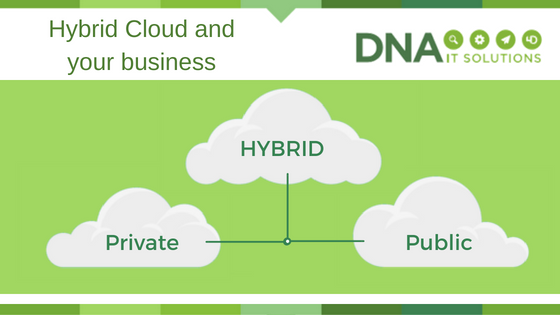
Sometimes an organisations needs are a little more complex and this is where hybrid can be the solution. A business can now put in place a combination of third party, cloud based and on-premises services that are flexible. Different data can be deployed depending on what the organisation needs and certain data can be given extra layers of security. Again, this is flexible and can move and change as the business develops.

Modern Enterprise

As technology moves on and data centres evolve there is a need for knowledge to make the right decisions for a business. With growth being the main objective of most businesses, having the IT infrastructure can be an enabler to access new markets and launch new products.

Shifting from an on premise situation to a multi-tenant data centre can seem like a daunting prospect but that is where we come in. DNA IT Solutions work on projects for businesses like yours every day of the week. We take an extensive overview of your business requirements so we can make sure your transition is smooth and with the minimum of downtime. We are there for you through the process and beyond.

If your servers are old, if you are considering moving some or all of your systems to a data centre then you should talk to us. DNA IT Solutions work with businesses that are interested in ensuring their IT infrastructure is ready for growth. We not only work with you to give the technology for today, we also plan with you for the future.

Cloud Services

Hybrid Cloud & your business DNA IT Solutions

There are many advantages in moving to the cloud including both flexibility and scalability.

There can be significant cost savings if you choose the right option for your business. That is why it is critical to make the right decision.

We have helped many organisations with their transitions, we know businesses like yours and we can make the change straightforward.

Our range of services address your requirements at any stage of your cloud journey:

Cloud Design & Transitioning Planning

Cloud is not just a solution for meeting storage needs. Progressive companies are transitioning to the cloud in order to use new technologies.

READ MORE

Capacity Planning & Workload Analysis

Capacity planning is the process that determines the IT infrastructure that is required to meet future workload demands.

READ MORE

Infrastructure Design & Transition

At DNA IT Solutions we have the ability to meet all your networking requirements, no matter how comprehensive or complex your IT infrastructure.

READ MORE


Our Cloud Partners

We partner with all the major cloud providers to ensure that you have the best options available to you.

A true enterprise grade network and architecture that offers total data sovereignty. With datacentres that are linked together and spread across the world IBM offer security and total compliancy.

READ MORE


Microsoft Azure Cloud

Microsoft Azure is a growing collection of integrated cloud services that developers and IT professionals use to build, deploy, and manage applications through a global network of data centres.

READ MORE


Amazon Web Services

Amazon Web Services (AWS) is the world’s most comprehensive and broadly adopted cloud, offering over 200 fully featured services from data centers globally.

READ MORE

So, what’s stopping businesses going to the Cloud?

IBM Cloud

Even though Cloud computing is not a new idea and by now every business is using some form of Cloud technology service; on a global level, it is estimated that about 80% of critical computing workloads are still run on-premises, with hardware that a company owns and manages itself.

In our experience we find that most companies are interested in the Cloud and many have already tried to use the Cloud, but there is a lot of factors holding back further Cloud adoption. Migrating to the Cloud is often hampered by confusion about what options are available and where to start.

Here are some of the most common ones:

  • Hidden costs of using Cloud services are a major problem – by now, many businesses have had a bad experience of Cloud being more expensive than they had anticipated and there’s always horror stories out there about different company’s bad experiences.
  • Unpredictable costs – in particular, the egress fees that can catch people out. This is when the costs of drawing data out of the Cloud environment is much higher than anticipated and can make the entire Cloud solution uneconomical.
  • Confusing pricing models – in fairness, some of the pricing models of the public Cloud vendors is designed to bamboozle the customer and funnily enough, always tends to favour the vendor if costs are higher than expected. The problem can be that whatever pricing model is in place at the start, changes to the environment can lead to massively unexpected hikes on the fees and we have seen several customers who tried to run an application in the Cloud and ended up taking it back onto traditional server infrastructure again, as the costs simply went through the roof.
  • Vendor lock-in – this is a real problem for some Cloud services, because the more bespoke a solution is, and the more complex, it can often heavily rely on specific tools that the Cloud vendor has in place. The problem is that in many cases this leads to a situation where the customer is “locked in” to that particular Cloud service and moving is going to be very difficult, complex and costly.
  • It can be hard to differentiate between one public Cloud or the other. Choosing which one to work with is difficult for some customers as the vendors are often perceived to be all offering pretty much the same thing.

Time for a better approach.

The IBM Cloud has been developed through learning from the mistakes and shortcomings of the first generation of Cloud providers. It’s designed from the core to take on the more difficult enterprise applications and so called “legacy” systems, which were designed in the era of traditional IT infrastructure, and do not always work well in the Cloud environment.

DNA IT chose to partner with IBM as our primary Cloud provider as we could see first-hand, the challenges that many customers had in the market.

We have found that what businesses really need from an MSP offering Cloud services are things like clear, predictable costs – so that IT budgets can be realistic and financial planning is meaningful and flexibility to react quickly to changing business requirements.

To give a recent example – one of our customers in the charity sector was holding an annual televised fund-raising concert and for the space of a weekend they need to host a web page where people could visit to donate during the concert or indeed in the days that followed. This short-term web site was going to be getting huge visitor traffic with very unpredictable spikes in demand over the course of the weekend and during the first live TV broadcast. DNA IT were able to spin up a high performance, highly resilient, clustered web server environment in the IBM Cloud and have it built and tested, ready for the TV concert – all within a week. Once the event has passed, the environment can be stood down and the customer will not need this level of performance for any of their systems until the same event in a year’s time. This is a great example of the power, speed, and flexibility of the Cloud. You simply couldn’t dream of moving that fast with your own infrastructure in-house, and even if you could, the costs would be astronomical and way out of reach for businesses in the SME sector.

Security is on everyone’s minds now and for good reason. Customers need to feel that moving to the Cloud isn’t going to undo their security posture. They need a Cloud environment where security is by design, not an afterthought as it usually is. Right from the start, security must be first and foremost on the minds of the technical team building the Cloud systems for the customer. This is critical; all too often we have seen that security only comes into the picture at the end of the project, and people try to make something secure that’s already designed and built, rather than having security built-in from the start.

Cloud providers are not security companies, they just provide an infrastructure – whereas IBM is the only global Cloud provider that is also a leading global security company. You really feel the difference in this when you’re designing a Cloud architecture – the emphasis on security is there from the start.

The future of Cloud technology is based on the idea of IT being flexible and able to offer real competitive advantage to businesses. It must enable customers to grow their businesses and be able to react quickly to changing circumstances. Going to the Cloud cannot mean that the customer is locked in and has less control and freedom than they had in the old traditional model.

It is no surprise to us that the IBM Cloud is growing so rapidly and is now the 3rd largest Cloud provider in the world. It has enabled DNA IT to deliver Cloud services without the problems of the first-generation Cloud providers. Customers get the benefit of the Cloud’s flexibility and scalability, but with security services built into the design from the start, fixed monthly costs with no surprises for the Finance director, no punitive egress fees, and the freedom to migrate workloads easily, anywhere you like, should your needs change.


Adrian Kelly is the Sales and Marketing Director of DNA IT Solutions.

Tech Excellence Awards 2019

We’re delighted to announce that DNA IT Solutions are shortlisted in two categories in the 2019 Tech Excellence awards.

Project of the Year – SME

This award is given to reward a project that demonstrates outstanding technical excellence in the Irish SME Sector

DNA have been shortlisted for the IBM Cloud migration project we completed for Blue Insurance.

Cloud Partner of the Year

We are also shortlisted in the category of Cloud Partner. This award recognises companies with outstanding services and standards of excellence in Cloud services. DNA have been shortlisted for the work we have done with IBM in the past three years as an IBM Cloud Partner.

For more information on the awards, click here: https://techawards.techcentral.ie/

Why Business Continuity Planning should be on Your Agenda

Business Continuity DNA IT Solutions

What would happen if your building burnt down tomorrow?  What if your system was hacked and all your data stolen?  Everything was just gone.  How would you continue?   Shocking as this seems, this will be somebody’s reality this year.

If your business closed down, even for a few weeks, you would be surprised at the impact that would have.  Customers would have to seek your product elsewhere and your competitors will jump in to provide that option for them.  Your staff may decide they cannot wait around and you could lose expertise that is hard to replace.  All in all, it would be a complete disaster for your business, one you may not recover from.

Resilience

Resilience is the key when it comes to business continuity planning.  Having the resilience to know where there is risk, putting a plan in place to reduce any impacts and knowing you can get back on track.  It’s planning for what we hope won’t happen but knowing that if it does, we can get back up and running as quickly and smoothly as possible.

Protecting Data

Your business data is at the core of your operations.  Having this critical information in the right place is very important.  By ensuring that it is held in a secure location off site you will reduce the risks significantly.  Also ensuring backups are scheduled at timely intervals will result in an easier return to business.

Complete Recovery

When the worst occurs you require a complete recovery after the incident.  You want to prevent too much disruption in order to get back working again.  You want your phone lines to be diverted, a new temporary premises to operate from and easy access to your systems – a ‘business as usual’ scenario.

Business Continuity not only involves making a plan, it also means testing that plan to ensure it will work in the case of emergency.  It’s like the regular fire drill you do.  Managing the whole process from design, planning and implementation needs the expertise of an IT specialist.

To discuss business continuity planning or disaster recovery planning you can speak with the expert team at DNA IT Solutions.

How can Cloud help my Business?

How can cloud help my Business DNA IT Solutions

Are you planning your business strategy for this year?  This is the time of year that we look back at what kind of year the business has had and consider what improvements can be made.  We also then take a view of where we would like to be in 12 months’ time and try to put a plan in place to get there.

Planning Ahead

You may now be looking at cloud as an option for your business but are unsure of the costs and time involved.  The good news is that cloud allows you the flexibility to take what you need and only pay for what you use.  The beauty of being able to scale up or down as required in a quick efficient manner is what makes cloud so attractive.

You don’t need to be one of the ‘big guys’ anymore to consider cloud.  It allows you to integrate technologies even as a smaller player that without cloud you would need considerable budgets and advanced infrastructure.

Innovation

If you have the idea, then maybe cloud will allow it to become a reality.  Innovation becomes a reality with cloud as certain barriers will disintegrate.  Allowing you to access new markets, launch new products and services as you see fit.  Cloud also allows you to automate certain functions within the business.  This will save time and the resources can be pointed towards other more profitable activities.  Cloud can improve workflows and free up time that was being spent on manual processes.

Backups

What would you do if your system crashed, or you were hacked or a natural disaster destroyed all your current information?  Do you have a reliable backup?  Cloud allows a secure place where a backup can be held off site, the peace of mind this brings can be priceless.  Cloud allows for secure information sharing and helps with data protection regulations on the storage of data.

With fixed monthly costs and no major investments in new servers even your financial manager will be happy.  Think about getting your comms room back and use it for something a bit more inventive.

A new year will bring new opportunities, maybe cloud is that opportunity for your business.  Talk to DNA IT Solutions about transitioning to the cloud today.


Network Security – are you secure?

Are You Secure network security DNA IT Solutions

What is Network security?  It is the practice of preventing unauthorised access to a private network or the monitoring of use of a public access network.

In simple terms this protects your company data, protects your users and in turn protects your reputation.  In this age of GDPR and data protection, it is more important than ever to ensure what you have stored remains secure.   With increased security threats coming from cyber criminals there are new risks to consider all the time.

Access  

Sometimes the biggest threat can be quite innocent and will come from within the walls of your office.  Do you know who has access to your system?  Now think about that question very carefully before answering.  Even with your staff, not all of them should have the same access level.  Then contractors should have even more limited access and outside agencies none at all.  Consider former employees, interns and short term visitors to your office.   Do they still have access once they leave the building?

Misuse of technology

Misuse or modification of both hardware and software technologies are a big threat.  There should be procedures in place to avoid this happening.  The right network security will target various threats and stop them from entering the network and spreading.  And just in case they do get through, it’s important that you have the most up to date anti-virus and anti-malware software in place.

All the applications that you are running to operate the business should be secure and kept up to date.  This will ensure you are not allowing any vulnerabilities.  It’s easy to do this but sometimes it will get forgotten about.  Firewalls will stop some major risks in their tracks, before they start to cause havoc but they only work in conjunction with everything else.

Online Security

Web security will control what websites your users can access, thereby keeping them on reputable and safe websites.  Lessening the risk with email network systems makes real sense.  This will filter potential issues before they land in the user’s in-box.  Talk to your team about data loss prevention.  Make sure they know how to keep information secure by not forwarding or sharing in a non-secure way.

The Wi-Fi code

Another aspect of network security pertains to wireless.  You would do well to protect the network by not having the same for all users.  It is recommended to have separate Wi-Fi access for staff, visitors and public.

As with all security, IT or physical security of buildings, there is no one-size-for-all solution.  A combination of layers of security is the best option.  If you do not have the confidence that your network security is up to scratch, maybe it is time you spoke to the experts at DNA IT Solutions.


Is Managed ICT Cresting A Wave?

Managed ICT DNA IT Solutions

Outsourcing the IT function isn’t a particularly new idea but cloud facilitation is driving a new wave of adoption, leading some market observers to think that critical mass has been achieved, writes Alex Meehan, Sunday Business Post.

Recently the Sunday Business Post ran a feature that DNA IT Solutions contributed to, here we share with you what our thoughts were.

Changing role of the data centre

A further interesting development in how managed services are developing is the changing role of the data centre. Where owning or using the services of a data centre used to be something solely done by large enterprise-scale companies, increased interest in cloud services amongst companies of all sizes has changed that. Today, companies of all sizes are using data centre services and they want managed service providers to facilitate that for them.

Declan Hussey, chief executive officer of DNA IT, argues that it’s no longer feasible for many companies to build out data centre infrastructure for smaller companies to a high level. ‘’It just wouldn’t make sense when they can come to a company like us instead. What would take them six months to consider, design and build, we can do in a fraction of the time at any location across the globe at enterprise level” he said.

IT as a service

“At the same time, 10 or 12 years ago the only companies talking about data centres were enterprise level in size. Now even small companies have them, and routinely talk about their ‘data centres’ in some respect. That change is dramatic in a relatively short period of time.” According to Hussey, the whole IT-as-a-service proposition has become a recognised and established business model and is no longer considered adventurous or unusual. “The concept of taking all encompassing IT management-as-a-service or security from a company like us is now a routine way of doing things so companies need a really good and compelling reason why they’d do it themselves” he said.

“They know they can engage someone else to take the workload off their hands and use the savings in terms of time, resources and money to improve their operational efficiency, reduce their risk, improve their time to market and all that goes with that.” This is a broad trend across the managed service sector, and it’s being observed by different companies looking from different vantage points.

IBM Cloud – not just big cloud for big business

IBM Cloud Not just Big Cloud for Big Business DNA IT Solutions

As a medium sized business, you often need to do more with less, and that’s what cloud is all about. Cloud is always available, reliable and needs very little setup or capital expense. Cloud services will expand as your business needs them. With cloud technology, your medium size business can compete on the same level with businesses twice your size.

Why IBM Cloud?

Flexible – You can get exactly what you need for your business.  If you want certain aspects now, other parts later, or all you can get right now, it is all possible.

Simple – Easy to access through local providers who will expertly guide you through the whole process in an easy managed way.

Scalable – ready to scale up or down as your business demands it.  Only paying for what you use and ready to change when you are.

Accelerate your business – Simple, flexible and scalable means that your technology will not be holding you back.  Access new markets and launch new products to grow your business.

Business Growth

You can improve your bottom line in more ways than one.  Access to IBM cloud can help grow revenue by allowing access to new markets in order to expand globally.  We start with a business-first strategy, one that fits your needs whether you are a small business that plans to scale, or a large enterprise that requires additional isolation.  All hosted from your choice of IBM Cloud Data Centre locations around the world.  With strict security controls your data will remain secure and reporting will be made easier.

IBM Cloud enables you to:

  • Deploy high performance compute and storage infrastructure in secure IBM Cloud Data Centres around the world.
  • Test and adopt a broad range of cloud services and capabilities from IBM, open source communities, and third-party developers.
  • Connect to all of your legacy systems and apps from a single, scalable, cloud platform through private network and API capabilities.
  • Spin up and turn down resources in real time as your business needs or workload demands change.

IBM Cloud infrastructure provides the highest performing cloud infrastructure available. IBM Cloud infrastructure is one platform, which takes data centres around the world that are full of the widest range of cloud computing options, then integrates and automates everything

IBM Cloud is designed to host scalable resilient apps and application artefacts that can scale to meet your needs, remain highly available, and be quick to recover from problem.

DNA IT Solutions is a leading IBM Cloud provider in Ireland.  IBM Cloud is not just big cloud for big business, find out more by talking to our expert team.